Q&A With Children's Mercy Dr. Harvey
USTA Heart of America had a chance to catch up with Children’s Mercy Sports Medicine’s Dr. Brian Harvey recently and talk about injury prevention in tennis.
USTA Heart of America: Generally when people think of sports medicine, they think of what comes after an injury. But there’s also an aspect of injury prevention. What’s the importance of prevention instead of waiting for the worst to happen?
Dr. Harvey: When somebody finally gets in to see me because they’ve had an injury, that’s a big part of what we talk about: How do we prevent this from coming back? It’s important to do physical therapy and rehab exercises. It’s also important to have a really good warmup. You should spend 20-30 minutes as a warmup, not just showing up and starting to hit.
With the high school age and younger, we start to wonder, ‘Do you really need to play year-round? Do you really need to play 20 tournaments a year?’ Kids really shouldn’t be on the court for more hours than their age in years. So, a 12-year-old shouldn’t spend more than 12 hours playing tennis every week. I encourage all athletes to do cross-training, take time off, and really pay attention to the way you’re eating and drinking.
USTA Heart of America: What are some quick tips for injury prevention and practicing good training techniques?
Dr. Harvey: Make sure you’re doing a simple warmup when you get on the court. Whether that’s footwork, lunges, bridges, planks, those kinds of things to make sure your body is ready to perform.

As far as off the court, we want to limit the amount of sport specialization that we have in tennis. Don’t just play only tennis. Wait to specialize until you’re 15 or 16. You need to give yourself a day off to recover. Don’t play in multiple tournaments back-to-back-to-back. For the younger kids, focus on more free-play opportunities. Make sure unstructured, non-practice free-play is at least equal to the amount of structured time they’re actually playing in practice and in competition. We know that injury goes up if the competition-to-free-play ratio is higher than two-to-one.
From a prevention standpoint, if you’ve had a bit of a layoff, have a good plan on how to get back into training. Slowly ramp up, you shouldn’t just go out and start serving 1,000 balls on day one. It should be a gradual work-up. Unfortunately with COVID-19, a lot of people had a layoff. In that month or two after everybody started playing again, we started seeing a ton of overuse injuries.
USTA Heart of America: What other advice do you have for athletes trying to stay healthy?
Dr. Harvey: It’s important with tennis athletes, and really athletes in general, to know that they shouldn’t push through pain. If they’re having consistent pain, that’s a red flag and they really should be looked at.
In this day and age with the increased focus on mental health, it’s important to recognize that we do have a Family Sports Counselor at Children's Mercy and that if they’re having issues they can certainly reach out.
You also need to focus on what you’re eating. Have a good plan as far as how you recover and how you can prepare your body. The unique thing about tennis is that you can have tournaments where you’re playing four-or-five matches a day as a youth tennis player. We need to look at how they’re recovering in-between matches from a diet and hydration standpoint. Having a good diet can mean the difference between winning that tournament and losing in the second or third round because you’re not really hydrated or fueled.
Children’s Mercy’s performance lab is also a good tool for injury prevention. We can potentially save your shoulder or elbow if we can correct some of the things that you’re doing mechanically while increasing your performance. Really, from the therapists, to the mental health counselors, to the dietitians and physicians, Children’s Mercy has 360° coverage for athletes.
Related Articles
-
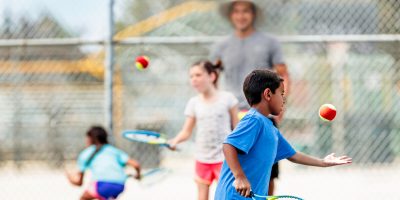
 Changing Young LivesJuly 30, 2026A partnership between USTA Heart of America and Synergy Services is helping children experiencing housing instability to find fun and friendship through weekly tennis. Read More
 -
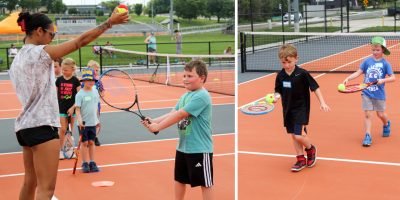
 Bonner Springs TennisJuly 08, 2026With renovated courts, local partnerships and welcoming programs, Bonner Springs Parks and Recreation is creating more ways for families to discover and enjoy tennis. Read More
 -
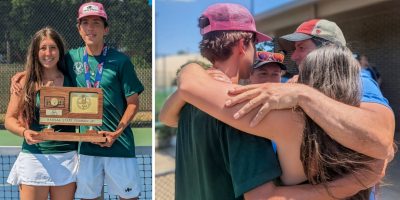
 Sibling State SweepJune 09, 2026Siblings Micah and Eli Ward captured Kansas 6A singles state titles, adding another chapter to a family tennis legacy built on hard work and sportsmanship. Read More
Sign up for our Newsletter
Download the USTA App

