2020 Women's History Month: Lele Forood, Stanford University

As we celebrate Women's History Month, USTA.com spotlights some of the female coaches who are making history of their own as the latest generation of sporting trendsetters, serving to inspire more females to enter the coaching corps at the NCAA level and beyond.
Stanford University is synonymous with excellence in NCAA Division I women's tennis, and that's thanks in large part to the decades-long influence of Lele Forood.
A former All-American for the Cardinal in the mid-1970s before turning professional, Forood earned All-American status for Stanford in 1976, and later reached a career-high ranking of world No. 30 in her time as a WTA pro.
A member of the WTA board for nearly a decade, including as secretary-treasurer from 1983-87, Forood earned the 1983 WTA Player Service Award, given annually by the tour to a pro who goes above and beyond for her peers. She also spent time in service to the tour by helping promote the start of the women's event in Strasbourg, a lead-up event to the French Open that is still played today.
Returning to the Farm to complete her degree, Forood's coaching career began as an assistant under her junior coach and longtime mentor, Frank Brennan, Jr. She later ascended to the associate head coach position in March 2000, and succeeded him as head coach beginning in the 2000-01 season.
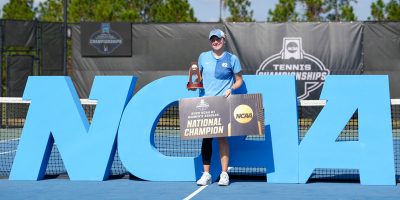
In her first year at the helm, Forood led the team to an undefeated season in 2001, capping a 30-0 record with a 4-0 victory over Vanderbilt University in the NCAA Division I Championship. On Brennan's staff for five of Stanford's national titles in 1989, 1990, 1991, 1997 and 1999, Forood has since led the Cardinal to nine more championships, including three straight (2004-06), as well as the last two (2018-19).
She boasts over 470 career victories and has coached 25 All-Americans, five individual NCAA singles champions and five NCAA doubles champions. In addition to being the first female coach to win an NCAA team title in tennis, Forood was also named ITA National Coach of the Year twice (2003, 2018) and the conference coach of the year six times (2004, 2005, 2007, 2010, 2011, 2018).
USTA.com recently caught up with Forood to talk about her decorated tenure on Stanford's campus, her time as a player and a player-administrator for the WTA in the tour's infancy, the changes she has seen in college tennis over the past four decades, and more.
USTA.com: What made you want to attend Stanford and later return to coach?
Lele Forood: I was born in San Francisco, and I grew up for seven years in the Bay Area. Stanford and Cal were on my radar since I was very young. I had the little banners in my room for both schools. When I was applying to colleges when I was 17, I applied to both of those schools and a couple of others, including one in Florida—at that point, I was living in Florida, in Fort Lauderdale—but I think California had a little more for me to get back to where I came from. When I got admitted to Stanford and got some financial aid from them, it was a no-brainer. It was like, 'OK, that's where I'm going, for sure.'
My connection to the coaching side of things was that, when I left Stanford in 1979 to start playing for good, the women's team's coaching job was open. My junior coach was Frank Brennan, Jr., and I spent summers with him, his wife and their family in New Jersey. I used to play out of there in the summers from their camp. That was my home base in the summers in New Jersey. I told Frank that the job was open at Stanford. They were very interested in getting to California at that point, so he went out and interviewed and got the job for the fall of 1979.
I was always coming back and forth and visiting him at Stanford when I was in my professional career, and when I was back for good in 1987 after doing my tournament promotion to start the WTA event in Strasbourg, Frank asked me if I would be interested in coaching with him because he had an opening for an assistant position.
I was a little hesitant at that point because I wasn't sure that I wanted to go into coaching, but I did. It was a very good team, and we won a national championship the first year in the 1988-89 season, and after that, I stuck with it. I enjoyed it, and I enjoyed working with my coach, so we did that for 12 years together until he retired.
USTA.com: What do you think some of the biggest differences are in regards to when you played collegiately and now?
Lele Forood: It's almost like two different planets (laughs). Our opportunities were just getting started in those days in the 1970s. I enrolled in Stanford in the pre-scholarship era—well, the pre-athletic scholarship era—in 1974. Things like All-American [awards], that came in my sophomore year for the first time. I think [a big difference was] just recognition and opportunity in those days.
We were just really happy to start to see that we were going to be able to go to college, and maybe get it paid for, at that point. That was not the norm, and that was really a major change, a shift in things. At that point, the women's [professional] circuit had just gotten started a couple of years [earlier], so we were seeing at the professional level that women were able to go out and create their own opportunities on the circuit.
USTA.com: What were some of your takeaways of your time on the tour, specifically on the WTA board?
Lele Forood: I was on the WTA board during my playing career in the 1980s. It was nice to hear what was going on on the business side of things and be part of the decision-making: to work on the questions of what the tour should look like, what tournaments should be playing when. It was very different.
In those days, for example, Australia was the fourth Grand Slam and not the first. A lot of people didn't go to Australia in November to play the fourth Slam. The tennis world changed a lot in the 1980s. For Australia to have the weight and power of the other Slams, they needed to play first and get everybody there in their summer, in January.
Those were the kinds of things that we worked on with the board. We worked on ranking stuff, prize-money distributions, just a lot of how the tour worked.
USTA.com: When you took over the reins at Stanford, did you think that your teams would have as much success as you've had? What do you attribute the longevity of that success to?
Lele Forood: I was trying to not look at the big picture because that's pretty hard and intimidating to do, given the amount of success that had already been realized. I happened to take over a really good team in what wound up being the 2001 [championship] season. It was about the day-to-day of trying to make that team better, competing hard and everything like that—and we wound up going undefeated that season, which was a good way to start one's career (laughs).
At that point, my assistant coach was Frankie Brennan III, Frank's son. He had been the volunteer assistant coach when I was the assistant, so we had already worked together for about five or six years. When Frankie and I took over, when I took over the head job and he became the full-time assistant, we were very familiar with each other. We'd grown up together, basically, almost all of our lives. We had a good rapport. We saw things similarly. We were both pretty technically oriented as coaches. We just felt that if we could make people better, everything else would fall into place.
We had early success—we won in 2001, 2002, we lost in the finals in 2003, and then we won from 2004-06. In our first six years, we won five titles, so at that point, we weren't worried about whether we'd be able to succeed (laughs). After that, it got a little harder. The college tennis world has changed. There are many more quality teams with great coaches, and it makes it harder to dominate in that fashion.
USTA.com: Would you say that Coach Brennan was the biggest influence on your tennis and coaching career? Who else had an influence?
Lele Forood: He was absolutely the biggest influence in my tennis career. The players that I looked up to when I was a junior—certainly, you had Billie Jean King and players of her era who were really trailblazing in the 1970s. Chris Evert was a high school classmate of mine (laughs), so obviously I got to follow her career very closely when we were growing up. They were two people who were big influences on me growing up, but certainly Frank was the biggest influence.
He gave me the chance to start coaching when I was 15 at his summer camps. I was a little bit of a reflection of how he thought of coaching. We were all a little technically oriented. We're not just out there hitting balls to people. Some coaches don't like to get too technically into people's games, but I don't come from that school. That's a difficulty sometimes with coaching: getting people on board with the idea that they might have to do something a little differently in order to have more success with a shot or a style of play.
I come from that world, and sometimes it takes college athletes a year to believe and get on the same page, and some never do. The ones that are more open to a coach's thoughts are probably going to improve faster.
USTA.com: Where do you think college tennis, in particular, stands as a sport for women at the highest levels?
Lele Forood: I think it's very good at the collegiate level. The way to evaluate it is to look at it in comparison to the professional game, and right now, there are so many former college players who are out there. In singles, maybe not as many, but in doubles, oh my gosh—people are making a huge impact on the pro game from the doubles side of things, and that may contribute even to those players being better at singles.
It's a very high level of play these days, and it's showing that more and more players, on the women's side, especially, are trying to get into the professional game. Some of the rule changes in college tennis last year did not make it easier to transition, but hopefully some of that has been corrected. There needs to be a good flow.
The thinking used to be that if you weren't great at 16, it was too late for you. They've realized that a 21- or 22-year-old, or players who've gone to college for two years who know, at most schools, that they're going to get [the rest] paid for after that, if they come back... so those who turn pro in the middle of their [college] career, it's a really good option for a lot of players who really want to play at the professional level.
The ability to not lose your scholarship if you do go and play for two years is just a dramatic improvement in what everybody's choices are these days, and I think that the choice to go to college initially is greatly enhanced by that rule.
Some schools even honor one year of playing and then take care of the athletes' scholarship when they come back for three years. Those are all things that make it less hard. It should not be hard for kids to have to decide to go to college in the first place. Your ability to start college, then leave, and then come back on somebody's else's dime, it's just an incredible incentive to start college.
USTA.com: You've had the opportunity at Stanford to coach players who've had success on the WTA in recent years, from Nicole Gibbs to Kristie Ahn to Mallory Burdette. Do you utilize their example, combined with the NCAA success that your teams have had, as a recruiting tool?
Lele Forood: We don't overplay it because it's still about coming to college and starting an education. For Nicole, for Kristie, for Mallory, for Carol Zhao, that was the important consideration—they wanted to get an education before they were going to play full-time. It's important, especially at my school, that this is about the education.
You're electing to go to college to get an education, and while you're doing that, we're going to be playing high-level tennis, and you're still going to be developing as a player. Therefore, when you get out on the tour, you very well might be better-suited to the professional life having had a year or two of college, with the maturity, the being on your own, the decision-making, all of that, on top of starting your education. Someday, if you want to earn your degree, which most of them do, you have less of a road to go down to get that degree.
USTA.com: What does a typical day look like for you and the team?
Lele Forood: It matters a little what quarter we're in. We're on the quarter system at Stanford, so we have three quarters instead of two semesters.
In the fall, it's individually focused for all college tennis players, so we have people playing different events in the fall. They're coming and going a little more. They go to different tournaments, depending on what they get into. That's a little more disjointed, quite frankly (laughs), but assuming that, they're quite typically going to class in the morning, then we have practice in the early afternoon, usually done by about 4 p.m., and then a lot of them take classes again later in the day or in the evenings. That would be a typical day for them. We see them individually sometimes, when class conflicts don't allow them to be at practice every day, so we have some one-on-one hitting here and there during the week. They're free to go play some professional stuff, if they can get into it and are interested in doing that.
When we get into the winter and spring, it's a little more cohesive because we're playing dual matches, and instead of individual tournaments, everyone is pointing towards the same dates of competition. We're trying to be more cohesive at practice, to get more people there at the same time, but it's always a challenge with class time. We're working as a group more at this time of year. We have final exams coming up [for quarter No. 2], so we won't see everybody for about eight days, and then we'll regroup and get our spring quarter underway.
USTA.com: What do you enjoy most about coaching at the college level?
Lele Forood: I look at it like this. I've taught tennis since I was 15 years old. My biggest enjoyment from this is just the personal development of the individual student-athletes: helping them grow their game, helping them understand their games, working on things that each player needs.
We're still an individual sport that's scored as a team sport. Team activities are important, but [in a dual match] you have six singles players, three doubles teams, that are out there doing their own thing. From a development standpoint, I think it's important that you take a personal approach with every player. They have different goals, different games, different everything, so it's really a one-on-one deal working with your athletes to be better. When the competition days come, it's a little bit of a validation of the work that's been put in during the week.
USTA.com: How do you think the landscape for female coaches has changed over the course of your career?
Lele Forood: Everything's changed, and it's changing largely for the better. The NCAA and compliance offices are getting more litigious, which is the downside of the college coaching world these days, but the opportunities are better. The facilities are better. What you have to work with is better.
I think, overall, it's going in a really nice direction. There have just been huge improvements in what's going on in college sports.
USTA.com: Do you have any advice to current players who might want to get into college coaching?
Lele Forood: It's a very good career. There's a lot of opportunity because there's so much movement at the volunteer coach level, the assistant coach level. It's great to jump in there at any level if you're really interested in coaching. It's probably a little more secure than coaching a player on tour (laughs). You don't have quite as much travel.
I'd like to see more former college players, even more professional players, choose to take up coaching in college. It's a great opportunity.
USTA.com: If you could narrow down your career to one highlight, what would it be?
Lele Forood: That's a hard one for me. It's really hard to pick out one situation, one title, or something like that. The thing with coaching is that, every year, you start over. They're all meaningful to me. Obviously, some [seasons] have been more successful at the end, but I don't look at it as one big moment. This is my 20th year as a head coach, and it's my 32nd year coaching in college sports, so it's really hard to come up with a moment (laughs).
Overall, I can't come up with one specific thing, but what I feel good about, and what I feel like I'm a part of, is the development of our team members over 32 years and the impact that I and the other coaches have had on that through, arguably, the most important four or five years of their lives. It's where everything starts to change in your life, and you take on responsibility in a different way.
You come in basically being told what to do by your parents, more or less, and you come out an adult. There's so much development that goes on in this time, and I'm just happy to have been a part of the development of so many great people.
Photo: Lele Forood on the court at Stanford University. Photo courtesy of Stanford University Athletic Communications.
Related Articles
-
 Field announced for ACPWPMay 27, 2026Standout American collegiate players will compete for entry into the US Open at the American Collegiate Player Wildcard Playoffs set to be held at the USTA National Campus’ Collegiate Center, June 16-18. Read More
 -
") Collegiate WC PlayoffsMay 18, 2026The second annual American Collegiate Player Wildcard Playoffs, featuring the best American men’s and women’s college tennis players competing for six total wild card entries into the US Open, will be played June 16-18 at the USTA National Campus in Orlando, Fla. Read More
Collegiate WC PlayoffsMay 18, 2026The second annual American Collegiate Player Wildcard Playoffs, featuring the best American men’s and women’s college tennis players competing for six total wild card entries into the US Open, will be played June 16-18 at the USTA National Campus in Orlando, Fla. Read More -
 2025 NCAA champsNovember 25, 2025Michael Zheng and Reese Brantmeier were crowned NCAA men’s and women’s singles titles, while Mans Dahlberg and Dylan Dietrich and Gabriella Broadfoot and Victoria Osuigwe took home the doubles trophies. Read More

Sign up for our Newsletter
Download the USTA App

