BHM: Q&A with Aaron King
In honor of Black History Month, we are highlighting members of our community and sharing their unique perspectives on the importance of recognizing Black History Month, diversity in tennis and sharing their personal tennis stories.
Meet Aaron King. He started playing tennis when he was just eight years old after being introduced to the sport at a multisport summer camp in Vallejo, Calif. Tennis continued to play a central role in his life decades after his first introduction. He served as a USTA NorCal Junior Team Tennis coach, leading his team to a sectional championship, he served as a head pro and director of tennis with Cliff Drysdale Tennis and the local Parks & Recreation and now King is at the helm of his own business Solano Tennis, where he and Duncan Macleod were determined to take their private club experience and offer it to folks publicly through Parks and Rec. King also supports the local CTA, Solano Community Tennis Association, and has been instrumental in the growth and development of players in Solano County.

Q&A with Aaron King
Q: As a key player in Solano County's tennis scene, how have you witnessed the growth and development of players in the area, especially in terms of diversity and inclusion?
A: The largest shift I have seen relative to diversity was the belief the Williams Sisters gave to young folks around the world. This was accomplished on the heels of legends like Ashe and Althea. The most recent growth impact was directly related to the lockdowns of 2020 with tennis being rated the safest sport among others. Also, an influx of young champions such as Carlos and Coco have inspired many players.
I also want to give a special shout-out to the Love Tennis group led by Helen Tieu and Linda Kim who have been doing great work within the community and tennis development. They started with eight players a couple of years ago and now have a triple-digit roster of players they organize to meet with throughout the week and bonus special events on Holidays. They include everyone regardless of level, gender, etc. and it is at no cost.
Q: Are there any leaders or sources of inspiration in your tennis, and how do you pass on your knowledge and passion to the next generation, particularly among youth players?
A: I was inspired by a childhood friend Jeff to play competitively and then nudged by a couple of young players to begin coaching full-time. The late Willie Vallejos was my first coach. Ron Hightower is my tennis mentor and is responsible for my education in higher-level coaching and program direction. Scott McCulloch helped shape my acumen as a professional.
As far as passing the torch, there is no secret sauce. We love the game and the people who decide to take the journey with us. Our non-negotiable prerequisites are effort and respect. “Control the controllable.”
Q: In honor of Black History Month, why do you believe it’s crucial to have a diverse representation within the tennis community, and what steps can be taken to foster inclusivity in the sport locally?
A: Most folks are surprised to meet a 6’3” Black man for a tennis session. That reaction lets me know there’s still an inherent expectation bias in the sport.
Tennis attracts all walks of life naturally. Tennis ratings are measurements of progression, not definitions. Basketball players never ask for a rating before a pickup game. My mentor taught me many years ago “Your ego is not your amigo.”
For me, the largest step the community can take toward inclusivity is to simply include each other.
Q: Winning sectional championships as a JTT coach is a remarkable achievement. What strategies did you employ to lead your team to success, and how did this experience shape your approach to teaching tennis?
A: We focused heavily on training to play against a world No. 1. They trained brutally as if Carlos Moya was going to meet them at a local park on a Tuesday afternoon. All players struggle mentally. This gave them an underrated weapon and physical confidence. “They won’t be fitter than us, so they better be better.”
Q: You've been involved with local Parks & Rec., the CTA and now own your tennis business. How do you balance these various roles, and what unique contributions do you think each brings to the Solano County tennis community?
A: Vacaville Parks and Recreation has been instrumental in our ability to reach the public on court. Solano Tennis is structured to support program development in Vacaville and neighboring cities down the road. We have received a warm reception from the community thus far.

Our local CTA has also tied Adult USTA organizations into the public framework through Parks and Recreation. We funnel our beginner adult graduates into the CTA structure for league play if they want to compete with a team. And so far, it appears we are headed in the right direction.
Related Articles
-
 SheRallies Women's SummitFebruary 03, 2026Join USTA Northern California during National Tennis Month for our first-ever Women in Tennis Summit. Celebrating our women players, coaches, leaders, moms, and enthusiasts of the sport, this women's-only Summit features lifestyle sessions, renowned speakers, coaching education, tennis, and a chance to network and build community within NorCal. Read More
 -
![Visit the WHM Spotlight page]() WHM SpotlightJanuary 16, 2026In tribute to Women's History Month, March is devoted to recognizing the extraordinary women influencing our tennis community at USTA NorCal. Read More
WHM SpotlightJanuary 16, 2026In tribute to Women's History Month, March is devoted to recognizing the extraordinary women influencing our tennis community at USTA NorCal. Read More -
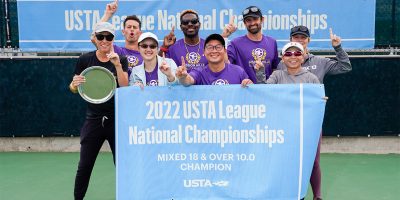
 NorCal League ChampionsJanuary 15, 2026USTA NorCal extends a big congratulations to the Mixed 18 and Over 10.0 team from Mission Hills who won the 2022 USTA League National Championships. Read more about their experience in preparation for Nationals and how they won it all. Read More

Sign up for our Newsletter
Download the USTA App

