Q&A with Andrea Norman, USTA Volunteer
March is Women’s History Month, and throughout the month USTA NorCal is celebrating many of the great women that make up our NorCal tennis community and highlighting their personal tennis stories, unique perspectives and contributions to our sport.
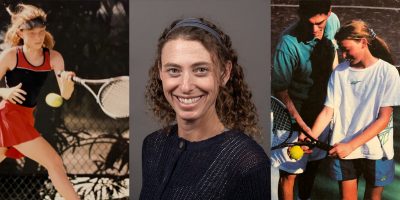
Meet Andrea Norman, a long-time USTA National and NorCal volunteer. Norman first started playing tennis in a local park in Bakersfield, CA when she was eight years old. Fast forward a couple of decades and Norman has become an invaluable leader of the sport and has made countless contributions to the game nationally and locally in Northern California over 28 years.
On a national level, Norman has served as a volunteer tournament director for national tournaments since 1994, including the USTA Girls’ 18 National Championships, and has been a member, vice-chair or chair on five USTA National committees, including her current role on the USTA National Nominating Committee. Within USTA NorCal, Norman has served as a member, vice-chair or chair on nine committees since 2003, including currently serving as the Junior Council Chair and serving her fourth term on the Board of Directors.
Norman’s leadership has been instrumental to the growth of tennis and her dedication to the sport has been recognized with numerous accolades. She earned the 2012 NorCal Betty Cookson Lifetime Achievement Award (formerly President’s Award), was inducted into the USTA NorCal Hall of Fame in 2012 and was the 2017 recipient of the Barbara Williams Service Award, which recognizes a female volunteer who has encouraged and inspired others to become volunteers and assume leadership roles at the community, section and/or national levels of the USTA.
Norman recently joined USTA NorCal to share more about her journey, the importance of creating fair play opportunities, her passion for tennis and more.

Andrea Norman
Q: You have been a long-time USTA and USTA NorCal volunteer. How did your volunteer service come about?
A: It is not common, but I began service to the USTA at the national level when I was asked to join the USTA Youth Competition & Training Committee (now known as USTA Junior Competition) and the USTA Constitution & Rules Committee. This came out of a friendship I had with the incoming USTA President, and at the time, I had little understanding of how to become involved as a volunteer. It wasn’t until two years later that I was first asked to become involved with USTA NorCal as a member of the Junior Council. I distinctly remember a mentor I had in NorCal, Lisé Frank, tell me how important it was to service at any level of the USTA and to understand tennis from the grassroots level and up, so I jumped at the chance when I was asked to volunteer for NorCal.
Q: You have directed the USTA Girls’ 18s National Championships and been very involved with player development and junior tennis at USTA nationally and locally. What motivates you to promote fair youth play opportunities and set an example for the next generation of women players?
A: Playing a role in a junior player’s career, no matter how small, gives me a sense that I am giving back to something that has given so much to me. I helped organize the Girls’ 18s Nationals when it was in NorCal and have continued to run both section and national junior tournaments since that first Nationals in 1994. It is inspiring being around young people who take up a skill and pursue excellence. I also see that families are often lacking the information needed to fully support their children in tennis, and there can be confusion about what to play, the rules of our game or why policies have been put in place that impact their participation.
I enjoy speaking with parents and coaches about the things that aren’t easily understood, hearing their objections and learning new perspectives and ideas to better grow the sport. I’ve also been fortunate to be able to share my experience with fellow tournament directors through educational workshops run by the USTA. I’ve tried to impart that if you can communicate well, have a decent match schedule and be kind, you will provide a good product to the consumer. None of these things are expensive to accomplish.
As for setting examples for future women in tennis, I am mindful that every interaction has the potential for a positive or negative impact. Thankfully, I’ve been fortunate enough (and have been around long enough!) to now volunteer alongside many women who came through my tournaments as young girls—two of whom are currently serving on the national USTA Board of Directors and two of whom I’m serving alongside on the USTA Nominating Committee.
Q: As a leader in the tennis community, what unique obstacles and pressures do women face in leadership positions within the industry?
A: When I first started volunteering, many years of service by women with the USTA had paved the way before me and I was fortunate not to have had many negative experiences. The first two committees I served on nationally had women serving in the role as chairperson, and when I joined the Junior Council in NorCal, long-time volunteer and current Board Member Suzy Cossette was chair. Discomfort early on was more associated with a lack of tenure, and less because I was a woman. That is not to say there were no obstacles or pressures or that they don’t continue today. However, I found that if I put my head down, worked productively, was prepared and fulfilled my commitments, I earned the respect of my peers. Having confidence in what I knew, investing time in learning what I didn’t and listening to others served me well as I navigated through my service in the USTA.
Q: What is the best piece of advice you would give to women who are trying to take on leadership positions within the tennis community?
A: Raise your hand to volunteer. Listen, learn and make a contribution in the area of tennis you are most passionate about. We need your expertise, passion for the game, ability to think outside of the box, compassion and empathy for others in our decision-making. Whether it’s to volunteer to help at events, become a Junior Team Tennis local league coach, help with a high school tennis team, become a certified Court Monitor or USTA official, join a committee or accept a leadership position, there are varying levels of commitment that can fit into your life’s schedule. I am a prime example of someone who raised her hand in 1993 to be a volunteer court monitor and bring brownies to feed other volunteers at the USTA Girls’ 18s Nationals. That one commitment led to opportunities in tennis that I never dreamed were available or possible.
Q: Looking back on your involvement within the tennis community, how do you think the sport has grown to be more inclusive?
A: Looking around the room, I believe we have a more diverse set of volunteers contributing to our mission to grow the game than when I first started. The key word here is contributing. It’s not just that we have invited more diverse individuals into our sport, but each person must feel as though their views and work are valued. Likewise, I see a more diverse tennis-playing population, but we can’t ignore that barriers to participation remain. Looking at gender, we have more boys playing junior tennis than girls, and we have more men coaching tennis than women. Finding ways to address these inequities will make us more inclusive. However, diversity and inclusion goals cannot just be set and achieved. The USTA must be engaged in an ongoing quest for diversity and inclusion to become incorporated into every aspect of our game.
Q: In your opinion, why are gender diversity and equality critical to the future of tennis?
A: Diversity comes in many forms including gender, as noted in this question, but also age, ethnicity, sexual orientation, socioeconomic background, persons with disabilities, diversity of thought and geography. I’m sure I'm leaving something important off this list. If our goal is truly to grow tennis, we must reach out to populations that have not yet connected to our sport and find ways to make them feel welcomed.
Q: Why do you think it’s important to celebrate Women’s History Month, both in general and in tennis?
A: The economic and social power of women is relatively new when you look through the long lens of history. Women have always been essential, but their contributions have not always been given the exposure they deserve. By taking a month out of each year to highlight these contributions, we do a service not only to those women but to the many women and men who now more fully understand the important role women have played. When I think of Women’s History Month in the context of tennis, I immediately think of Billie Jean King. The courage she and her fellow “Original Nine” had in taking a stand for equal pay by creating their own professional tour apart from the men has had a pervasive impact not only in tennis but in women’s sports in general.
Related Articles
-
 WHM: Lena LitvakMarch 27, 2026Lena Litvak, a former professional tennis player and the chair of the USTA National Grievance Committee, writes a first-person essay on what tennis means to her, especially during Women's History Month. Read More
 -
![Visit the WHM: Amanda Moore page]() WHM: Amanda MooreMarch 25, 2026From the pro tour to the USTA Board, Amanda Moore is using her voice to shape tennis. In this WHM spotlight, she discusses empowering women in coaching and her commitment to breaking gender stereotypes for the next generation of girls in sports. Read More
WHM: Amanda MooreMarch 25, 2026From the pro tour to the USTA Board, Amanda Moore is using her voice to shape tennis. In this WHM spotlight, she discusses empowering women in coaching and her commitment to breaking gender stereotypes for the next generation of girls in sports. Read More -
 WHM: Amy FranklinMarch 25, 2026In honor of Women's History Month, Amy Franklin shares how tennis went from being an unexpected discovery to a lifelong passion. Read More


Sign up for our Newsletter
Download the USTA App

