One Texas. One Tennis: Dr. Marlene Holmes

One Texas. One Tennis. is a series highlighting the many faces, voices and experiences of Texas Tennis. Everyone is welcome on the tennis court and when we’re open, we’re at our best. On courts across Texas, every player has a story and those stories show the true diversity and strength of our tennis community. Want to share your story: CLICK HERE
For Dr. Marlene Holmes, tennis is a sacred connection to family roots, a sanctuary of healing, and a profound journey toward rediscovering personal joy. What began as childhood memories of helping her grandfather with his tennis bag at Louisville’s Chickasaw Park blossomed into a walk-on college playing experience and, ultimately, an extraordinary chapter of international competition that culminated in a 2026 GLTA World Championship title in mixed doubles. Grounded in the warm, inclusive spirit of communities like Madison Ace in Dallas and shaped by the patient encouragement of teammates, Dr. Holmes carries the game’s ultimate gift both on and off the court: playing with authentic self-purpose, honoring unique backgrounds, and embracing personal growth.
USTA Texas: Take us back to the very beginning. What is the vivid memory, the specific person or the unexpected moment that pulled you into the world of tennis? What did that early version of you feel when stepping onto the court for the first time?
Dr. Marlene Holmes: One of my earliest memories of tennis is going to the courts at Chickasaw Park in the West End of Louisville, Kentucky, with my grandfather. I would help him with his huge water jug, his cooler and his tennis bag, and we would ride together for the quick 15 minute drive to the courts. I remember watching him put on his knee sleeve, laugh and talk with everyone, and then head out onto the court. Sometimes we would just go and watch, and I loved that too.
Because I was an Army brat, I wasn't always in Louisville, but Louisville was home. Whenever we came back to visit, I couldn't wait to go to the tennis courts with my grandfather. People always seemed to know who I was, even when I didn't know them. I was my grandfather's granddaughter, with a mother and aunts who were really good tennis players, so I think there was already an expectation that I would be good too! Chickasaw Park was where my family played tennis, and I grew up watching my grandfather and one of my aunts play there. There was such a sense of community at those courts. It felt like home, and I felt safe.
Around seven years old, I finally got my first tennis lesson right there at Chickasaw Park. After spending so much time watching from the side of those same courts, actually getting to step onto one and play myself felt special. I remember learning to “stomp” and “lift” when hitting a forehand, and I still remember those words to this day.
USTA Texas: Belonging rarely happens overnight. Can you describe a specific conversation, a post-match tradition or a moment on the court when you suddenly realized, "These are my people and this is where I belong"?
Dr. Holmes: Coming from volleyball, I was used to officials, line judges and someone else making the calls. So during one of my first college tennis matches, I remember looking around and asking my coach, “Where is the ref?” He looked at me and said, “You are the ref.” I was so flustered! Wait, I have to call my own lines, keep up with the score AND go get my own balls? I could not lock back in, and I lost the match.
Volleyball had always been my world. I started organized sports in sixth grade while living in Fairbanks, Alaska, and we didn't have a tennis team. There were courts at our local gym, but there really wasn't a tennis community or an opportunity for me to learn the game. I always wanted to play, but it just wasn't accessible to me.
Then this random opportunity came along during my freshman year at Independence Community College. I was already there on a volleyball scholarship when I got the opportunity to walk onto the tennis team. I played sixth seed with basically no formal tennis training, and somehow, I started winning matches. I even made the local paper, which became a little bit of a story around town because here was this volleyball player who had suddenly decided she could play college tennis.
But when I lost, I took it hard. I remember crying after one match because I thought my loss meant our entire team had lost. I didn't even fully understand how team scoring worked in tennis yet. Instead of making me feel silly or like I didn't belong, our number one player told me, “Don't worry about it. We're just glad you're here.” She told me I could get better and that she would help me.


- Marlen Holmes 1
- Marlen Holmes 2
- Marlen Holmes 3
- Marlen Holmes 4
And she did. She would give me little tips after matches. My teammates cheered for me. The guys on the team rooted for me. We laughed in that little van traveling to matches and had so much fun on our road trips. Nobody made me feel small because there were things about tennis I simply didn't know yet. They were patient with me, encouraged me to have fun and genuinely wanted to see me get better.
By the end of that season, I had qualified for Nationals. We weren't only competing against other junior colleges either. We played Division II programs as well. I never beat a Division II player, but I definitely didn't make it easy for them! My coach later told me that after some of my matches, he would tell the opposing coach, “This is her first year playing tennis.” Then he gave me a high five, pulled me into a big hug and simply said, “Thank you.”
That moment has always stayed with me. That season ended up being my only year of college tennis because volleyball was my scholarship sport, but I never felt like I was just the volleyball player filling a spot on the tennis team. They made me feel like I was one of them. They were welcoming, patient and rooting for me both on and off the court. Looking back, I think that is when I understood what belonging in tennis could feel like. I didn't have to know everything about the sport yet. I was surrounded by people who were simply glad I was there.
USTA Texas: If we stripped away the scores, the trophies and the physical exercise, how has the tennis community fundamentally altered the trajectory of your life? Share a story of how a relationship or a lesson learned on the court bled into your everyday world (your career, family or self-confidence).
Dr. Holmes: Tennis completely changed my life when I found the Madison Ace community in Dallas, and honestly, I wasn't even looking for it. A friend sent me an Instagram post about a tennis event and my family encouraged me to go. I decided to give it a try, not realizing how much that one decision would eventually change my life.
At the time, I was dealing with a lot of grief after losing my aunt to cancer. Watching her battle cancer was a very traumatic experience for me. At the same time, I had just finished my doctorate, which should have been one of the happiest moments of my life. So I was grieving, celebrating and, if I am being truthful, just feeling very lost. I was going through the motions of life, and I was really on a mission to rediscover joy.
I wasn't looking to become a competitive tennis player again. I had already experienced what it was like to compete at the highest level of college athletics through volleyball, and I wasn't trying to recreate that. At that point in my life, I wasn't looking for competition. I was looking for joy. I thought tennis might simply be something fun I could do for myself, maybe take a few classes, meet some people and enjoy being on the court. Then I found Madison Ace, and the next thing I knew, I was locked in.
Tennis gave me something to look forward to again. It gave me a community, challenged me and brought back a fire in me that I really thought I had lost. But what I didn't expect was what it would do for my family. Tennis brought back memories for them too. This was a sport that had already been part of our family for generations, and now they were watching me create my own tennis story. It brought joy back to all of us while we were making new memories together.
I think one of the biggest lessons tennis has taught me is that you can't assume you already know what something will or won't mean to you. Give it a try. I had already decided that this chapter of being an athlete was behind me. Tennis showed me that it wasn't. It could just look different.
And different is exactly what it became. In just two years, I went from showing up simply hoping to find some joy again to competing regularly, traveling internationally for tennis, becoming internationally ranked and winning the 2026 GLTA World Championships in mixed doubles in Malta. At 40 years old, I am having athletic experiences I never imagined I would have at this stage of my life. And somehow, I still feel like I'm just getting started.
But the wins and accomplishments aren't what changed my life. Tennis helped me begin to heal, but it also helped me rediscover a part of myself. Even now, every time I compete, I sometimes have this moment where I can't believe I'm actually doing this again. The difference is that I'm not doing it for a scholarship. I'm not doing it for a university. I'm not doing it because someone expects me to perform. I'm doing it for me. And I think that has been one of the greatest gifts tennis has given me.
USTA Texas: Tennis has a historic reputation for being exclusive, but your story proves it belongs to everyone. If you were standing face-to-face with someone who feels like they don't "fit the mold" of a typical tennis player, what would you say to help them see a place for themselves in this game?
Dr. Holmes: I would probably start by asking, “What is the mold?”
So often in my life, I haven't been the mold, and I definitely wasn't when I came back to tennis. I showed up in the wrong shoes, with racquets that were too heavy for me, regular workout clothes and an old tennis bag my grandfather had given me. Honestly, I never even planned on using that bag! I wasn't showing up looking like someone who had this big plan to become a competitive tennis player. I just wanted to play and I think that's the point.
Some of the most amazing stories in sports come from people who didn't fit whatever the traditional mold was supposed to be. You don't have to look a certain way, come from a certain background, start playing at a certain age or have all of the right equipment to belong in tennis. You can figure those things out along the way. I certainly did.
I would also tell them not to give up on finding their community. Sometimes that community is a big organization or a team, and sometimes that community can be just one person who invites you to play, encourages you to come back or makes you feel like you belong.
People before us have worked to make space for more of us to play tennis. I think part of our responsibility now is to take up that space and then make a little more room for the person coming behind us.
So if you don't think you fit the mold, good. Bring your story, your background, your personality and whatever makes you different to the court. You don't need the perfect shoes, the perfect racquet or even the perfect tennis bag. Pick up the racquet and play. There is space for you here. And once you find your place, reach back and make sure someone else knows there is space for them too.
USTA Texas: True community requires active building. From your unique vantage point, what is one meaningful, concrete step USTA Texas can take to open the gates wider and ensure that the next person who steps onto a court feels an immediate sense of welcome and ownership?
Dr. Holmes: I think one of the most meaningful things USTA Texas can do is take tennis outside of the tennis community.
For years, I wanted to find a tennis community. I lived in different parts of Florida, including Daytona Beach, Orlando and South Florida, and I knew about some of the major tennis destinations. But those weren't necessarily what I was looking for. I wanted to know where regular people could go to take a class, find a lesson, meet other players or simply get started. I honestly didn't know where to go.
That's why I think visibility matters. Sometimes tennis is really good at communicating with people who already play tennis. The bigger opportunity is reaching the people who don't know they are tennis players yet.
I would love to see USTA Texas become even more visible in community parks and recreation centers, especially in communities where tennis may not traditionally have a strong presence. Connect with schools where there may be young athletes like I was, who are athletic and curious about the sport but have no idea how to access it. For adults, connect with gyms, community organizations, alumni groups and other spaces where active adults already gather. Bring the information to them instead of waiting for them to find tennis.
And when we do invite someone in, make the first step simple. Tell them where to go, what to bring, who they will meet and reassure them that they don't need experience or all of the right equipment to show up.
I think sometimes we focus on opening the gate, but we also have to make sure people know where the gate is. There are people out there right now who would absolutely fall in love with tennis. They just haven't been shown how to find us yet.
Related Articles
-
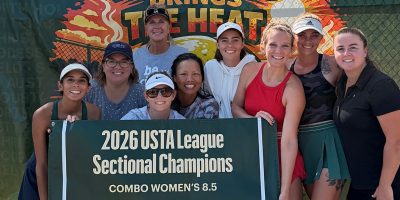
 2026 Combo SectionalsOctober 20, 2026Combo League teams from across Texas met in Corpus Christi to determine the 2026 section championship title. Read More
 -
 OTOT: Micah LeeOctober 14, 2026What began as a tentative step onto the court for Micah Lee has evolved into a transformative journey defined by resilience, community, and self-discovery. Read More
 -
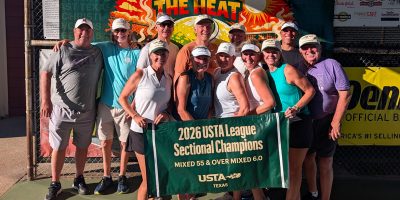
 2026 Mixed 55+ SectionalsOctober 13, 2026Teams competed in Abilene for the title of Mixed 55 and Over League Champions. Sectionals took place October 9-11, 2026. Read More

Sign up for our Newsletter
Download the USTA App

