One Texas. One Tennis: Dr. Robin Twymon
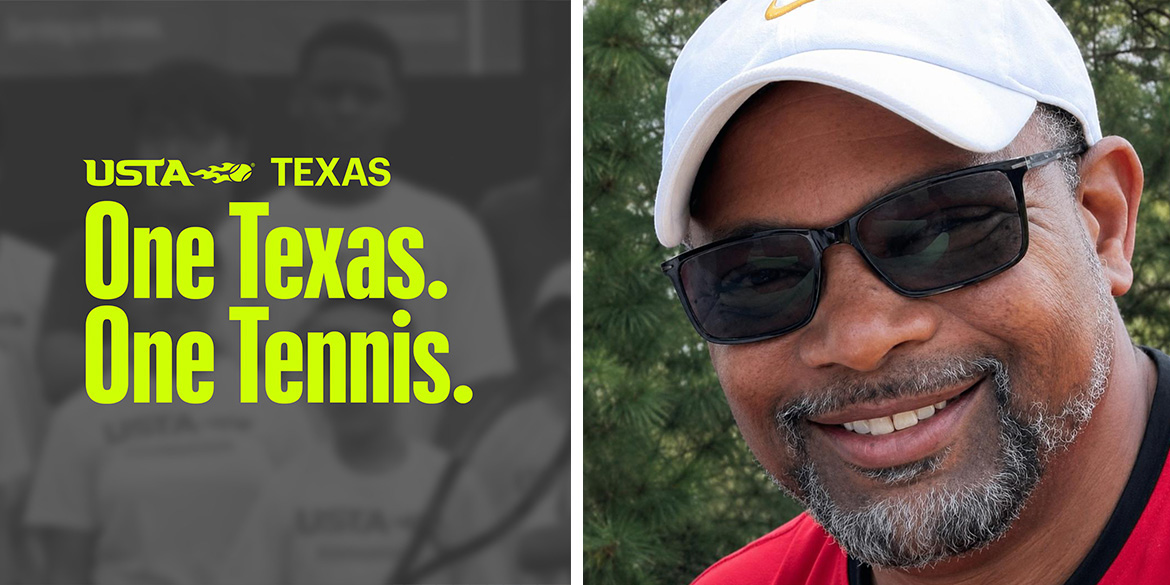
One Texas. One Tennis. is a series highlighting the many faces, voices and experiences of Texas Tennis. Everyone is welcome on the tennis court and when we’re open, we’re at our best. On courts across Texas, every player has a story and those stories show the true diversity and strength of our tennis community. Want to share your story: CLICK HERE
What began more than 50 years ago on the courts of Galveston Island under the guidance of his mentor, "Papa Charlie" Brooks, has evolved into a lifelong journey of purpose, resilience, and fellowship for Dr. Robin Twymon. Beyond the championship titles, international firefighter gold medals, and state-level coaching accolades, Dr. Twymon found a sanctuary and an extended family between the baselines—especially among the vibrant, tight-knit community at Houston's Homer Ford Tennis Center. As an educator and psychologist, he has used the discipline, patience, and strategy forged across five decades on the court as a blueprint for leadership and mentorship, helping shape the next generation of players and scholars. Today, at 63, Dr. Twymon is channeling that enduring passion into advocating for accessible public tennis centers across Texas, championing the true spirit of "One Texas. One Tennis." by ensuring that anyone ready to pick up a racket has an open court waiting for them.
USTA Texas: Take us back to the very beginning. What is the vivid memory, the specific person or the unexpected moment that pulled you into the world of tennis? What did that early version of you feel when stepping onto the court for the first time?
Dr. Robin Twymon: My tennis story started more than 50 years ago at Central Middle School on Galveston Island with a man named Charles Brooks, whom we affectionately called Papa Charlie. Coach Brooks was my PE teacher, but over the years he became much more than that—a mentor and, eventually, a fraternity brother. A tremendous athlete during his college days at Prairie View, he went on to become an educator and coach, and a damn good one at that. At the time, I was primarily a music guy focused on band, though I also ran track. Having two older brothers and an older sister who were heavily involved in sports, people naturally compared me to them, often saying, "You're fast. You're going to be like your brother." But I didn't want to become another version of somebody else; I wanted to carve out something of my own.
Then Papa Charlie introduced me to tennis. What fascinated me was how he explained the game: he didn't just talk about hitting the ball hard, but about angles, placement, control, and strategy. He posed the challenge of whether you could make the ball do what you wanted it to do, and that hooked me. He told me, "Try tennis. You'll love it for a lifetime," and he couldn't have been more right.
Tennis followed me to Grambling State University, where I hit with members of the tennis team while performing with the World Famed Tiger Marching Band. Eventually, the demands of the band won that battle, instilling in me a foundation of confidence, discipline, preparation, and excellence that I have carried throughout my life—and years later, I would have the tremendous honor of being inducted into the band's Hall of Fame. After college, I returned to Galveston, entered the fire service, and eventually became a Master Firefighter, with tennis remaining a constant companion. I competed internationally in firefighter and police athletic competitions, earning three gold medals—two in singles and one in doubles—across events in Las Vegas and Australia.
As adulthood brought marriage, parenthood, career demands, and everything else life entails, tennis became my essential outlet. I could leave work, responsibilities, and whatever was happening outside the fence behind, step onto a court, and simply let it rip. That release is what kept bringing me back, and now, at 63, I am still coming back.
USTA Texas: Who in the tennis community has had the biggest impact on your journey? And why?
Dr. Twymon: Without question, my biggest inspiration was Papa Charlie. While I admired icons like Arthur Ashe, Andre Agassi, Pete Sampras, Boris Becker, and so many others, there is a profound difference between someone who inspires you from a distance and someone who truly knows your name.
I remember playing my brother one Saturday on the courts at Central—we lived right across the street from the school, and Papa Charlie happened to be there getting equipment together for football season. After I missed a shot, he looked over and said, "You're not doing what I taught you, are you?" When I told him I tried, he gave me a lesson I have carried for roughly 50 years: put a game plan together and follow it, and if it isn't working, change what you need to change without abandoning your plan altogether. Over the years, he gave me another guiding word: pivot. He taught me that you can pivot without abandoning your purpose. That philosophy quickly became bigger than tennis; I carried it into the fire service, education, psychology, leadership, coaching, mentoring, fatherhood, and everyday life. And now, something truly beautiful has happened.
USTA Texas: Belonging rarely happens overnight. Can you describe a specific conversation, a post-match tradition or a moment on the court when you suddenly realized, "These are my people and this is where I belong"?
Dr. Twymon: I've spent my career working with young people and coaching, including guiding tennis teams to success at the TAPPS state level and watching students and players move on to colleges such as Yale.
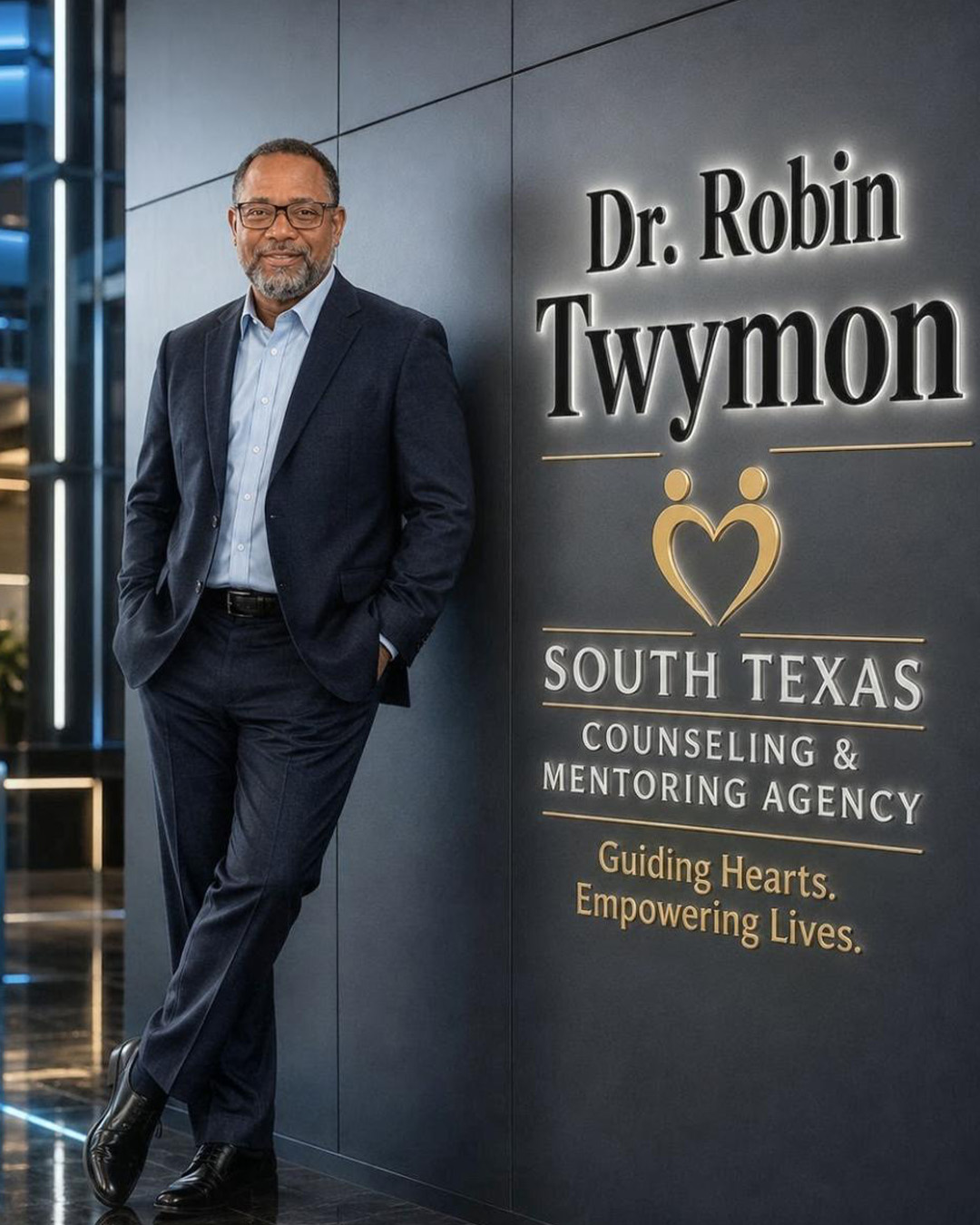
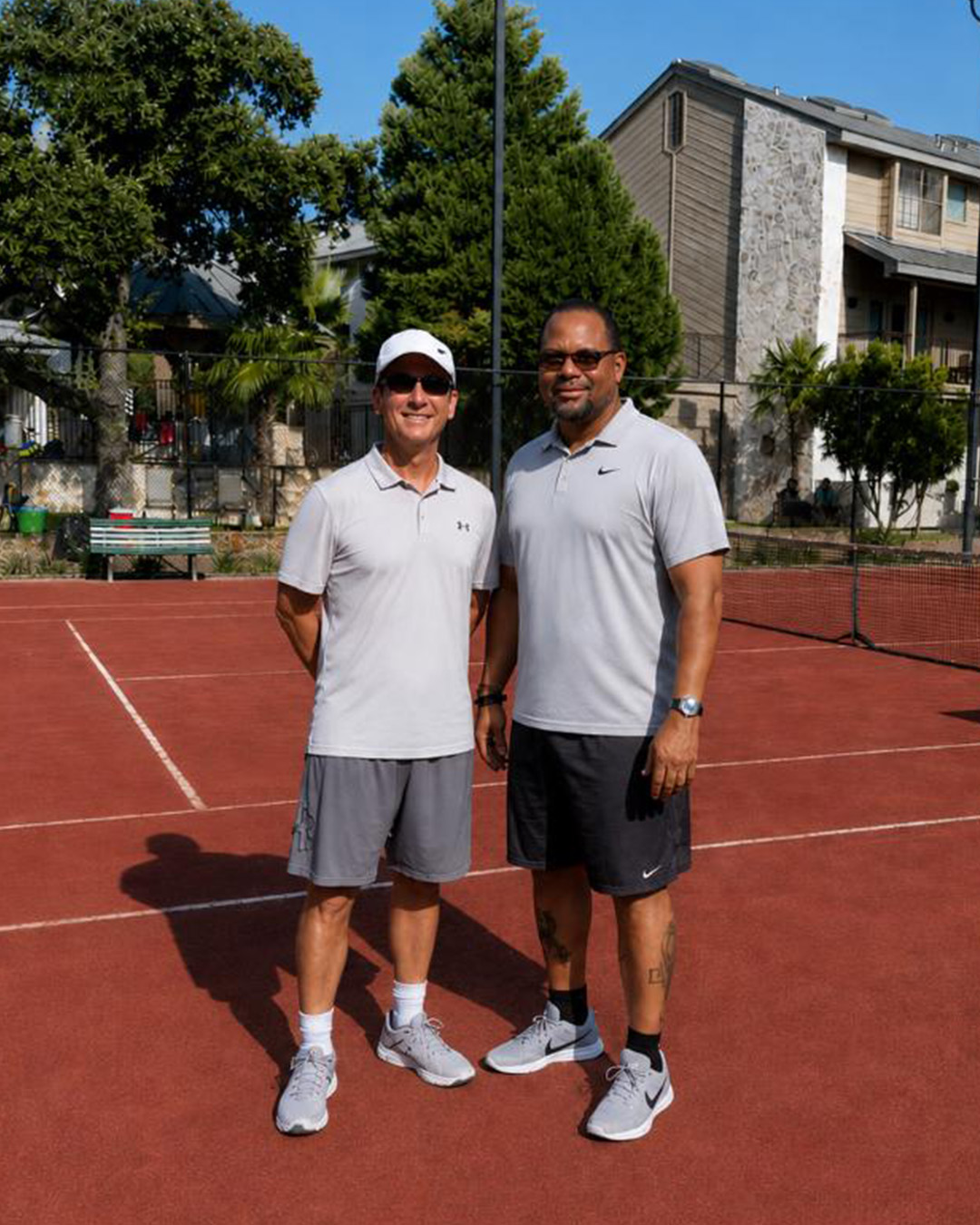

- Dr. Robin Twymon 1
- Dr. Robin Twymon 2
- Dr. Robin Twymon 3
The trophies and championships are wonderful, but the real reward comes years later when someone comes back and says, "Coach, thank you. You made an impact on my life." That's when I understand Papa Charlie differently. Somewhere along the way, I became the older man hoping something I say today might still be sitting inside a young person decades from now. Papa Charlie didn't just help create a tennis player; he helped create another mentor. That's legacy.
USTA Texas: What is one lesson tennis has taught you that you carry with you off the court?
Dr. Twymon: The ball reveals things—that’s the psychologist in me talking. My natural tennis game is aggressive; I like to attack, dictate the point, and hit the ball with authority, which mirrors part of my everyday personality. Yet tennis taught me that aggression alone isn't enough. Sometimes you need patience, touch, and the restraint to pull back, realizing that the smartest shot isn't always the hardest one you can hit. Through my career as an educator, coach, mentor, and psychologist, I came to understand that I wasn't just describing tennis—I was describing life.
People cannot all be reached the same way. Some can handle a brash approach, while others require something gentler; sometimes leadership demands strength, and other times it requires empathy, knowing when to speak and when to simply listen. Changing your approach doesn't mean abandoning who you are—it means expanding your game.
Ultimately, tennis reveals patience, ego, discipline, fear, confidence, anger, resilience, and decision-making. It exposes your capacity to adjust and your willingness to let go of what just happened: you make the decision, you hit the shot, you live with the result, and then you immediately prepare yourself mentally for the next point. In my psychology work, I often say that discipline is putting your future ahead of your feelings, and tennis forces you to practice that truth continually. Sometimes you believe your game is ready, only for an opponent to knock your butt completely off the court, prompting tennis to tell you plainly: Not yet. Go work some more.
At 63, I’m still putting in the work. My backhand is clicking, my forehand is clicking, and my serve is grooving. After more than 50 years, I'm still finding another level. I'm satisfied—but I'm far from finished.
USTA Texas: What is it about the tennis community that helps people from different backgrounds connect?
Dr. Twymon: Once we step onto the court, the labels start disappearing—a truth I learned firsthand at Homer Ford Tennis Center at MacGregor Park in Houston. Years ago, while playing a tournament at Bay Oaks Country Club, I met another Black player named Daryl Williams. As we both progressed through the draw, we began encouraging each other, and afterward, we started hitting together. More than a decade later, we are still hitting together, often five days a week. Daryl is a corporate attorney in his forties and I’m 63, so people routinely assume he’s my son; that’s simply my boy. Through Daryl and the vibrant community at Homer Ford, tennis transformed into family.
On any given day at Homer Ford, you might see four or five courts running simultaneously with players rotating in and out. Music plays, someone brings watermelon, another person supplies Gatorade and water, kids run around with juice boxes and chips, and someone sets up a tent and an industrial fan because the Houston heat doesn't play. The crowd is a rich tapestry of doctors, lawyers, engineers, educators, physical therapists, and custodial workers spanning different races, ages, professions, and backgrounds. There is no pecking order; nobody cares about the title on your business card when you’re staring down an incoming serve. We compete, laugh, talk trash, and take care of one another. During changeovers, we open up about our children, careers, relationships, personal struggles, and world events—and the moment the break ends, we step right back across the lines to try and beat the hell out of each other. Some people find that bond on a basketball court at the YMCA or within a regular golf foursome; I found mine between the baselines.
Sometimes the game even reveals the people who don't necessarily love tennis, but simply love you. When I once traveled to Austin for a tournament on clay and Daryl couldn’t make the trip, my line brother Reggie told me, "I'll ride with you." He packed into the car, stayed overnight, and sat courtside watching me play—not out of any deep passion for red clay, but because his friend was competing, so he showed up. That serves as another enduring lesson: the game can introduce you to people, but it’s the depth of the relationship that turns them into family.
USTA Texas: What is one thing we can all do to make tennis more welcoming and inclusive for everyone?
Dr. Twymon: First, stop believing there is a single mold for what a tennis player is supposed to look like. There isn't one body type, one age, or one background—big, small, young, old, beginners, advanced competitors, wheelchair athletes, and players with disabilities all have a place here. Just start. At first, your true opponent might not even be the person standing across the net; instead, the real competition lies in asking yourself: Can I make clean contact? Can I control the ball? Can I place it somewhere with intention? Can I accomplish something today that I couldn't do yesterday?
Beyond personal mindset, true inclusion requires real infrastructure: if we genuinely want people to play tennis, we have to give them places to play. While I applaud the USTA and support the ongoing work to grow the game, my perspective after more than 50 years in tennis leads me to strongly advocate for more accessible public tennis centers. There is a profound difference between a neighborhood having a couple of isolated courts and having a dedicated tennis center. Living in the Pearland area, my own subdivision has courts, but they sit behind controlled access as private amenities—and that is not public access. Other local parks may tuck a couple of courts beside basketball hoops and playgrounds, which certainly matter, but that remains fundamentally different from a shared hub where an entire community can point and say, "That's where we play tennis."
I have seen firsthand what happens when a venue like Homer Ford becomes that dedicated anchor: beginners know exactly where to start, seasoned players know where to find top competition, young people watch adults compete, adults step up to mentor youth, coaches teach, leagues flourish, families gather, and lifelong bonds form. Eventually, people show up even on days they aren't swinging a racket simply because that is where their tennis family resides. That isn't just a collection of asphalt and nets—that is a thriving tennis culture.
I want to see that kind of community anchor built across the areas surrounding our major cities. Why not Pearland, Manvel, Friendswood, Clear Lake, or Cypress? Why shouldn't each of these communities boast an accessible public tennis center woven into its civic identity? Never assume that just because sprawling subdivisions exist, accessible courts follow; many developments have none, and others keep theirs locked behind keycards and gates. If we are committed to placing rackets into children’s hands and proclaiming that tennis is a lifetime sport, then when someone finally says, "Okay, I'm ready—where can I play?", we must have an answer ready. The answer cannot be behind a locked subdivision gate or 30 miles down the highway; it belongs right there in their own community. Somewhere out there is another kid just like I was at Central Middle School. Maybe they will never turn pro, but that was never the point. Maybe tennis becomes their essential outlet, instills lasting confidence, or introduces them to their own Papa Charlie. Maybe they play for the next 50 years and eventually pass a racket to the next generation—but first, someone has to give them a court to step onto.
USTA Texas: What does "One Texas. One Tennis." mean to you?
Dr. Twymon: It means there is room on the court for everybody. I’ve lived enough life to understand that calling tennis a lifetime sport doesn’t mean life stops happening around us. We’ve lost cherished members of our Homer Ford tennis family, and those losses stay with you, serving as a sobering reminder that none of us know how many Saturday mornings or matches we have left. You never know how many more times someone will bring the watermelon, crank up the music, and start talking good-natured trash about who they’re going to beat that day. So play, compete, laugh, fellowship, teach someone, learn from someone, and find your people. That is the essence of "One Texas. One Tennis." to me—the profound understanding that this game does not belong to one neighborhood, one race, one age group, one tax bracket, or one archetype of athlete, but to anyone willing to pick up a racket.
When I reflect on tennis today, I think about how many distinct versions of me this game has known: the curious kid at Central Middle School; the Grambling bandsman squeezing in stroke practice whenever he could; the firefighter competing internationally for gold medals; the husband and father desperately needing a release; the educator, psychologist, coach, and mentor; and now, the 63-year-old man who can still look across the net at his hitting partner after a fierce rally and say, "Damn, we’re stroking the hell out of this thing today." Tennis met every single one of those men where he was, offering challenge, competition, discipline, patience, friendship, and community. It served alternately as an outlet, a classroom, a sanctuary to think, a haven where I didn't have to think at all, a platform to teach, an invitation to learn, and, above all, a place to belong.
Maybe that is what Papa Charlie recognized all those decades ago that I was far too young to grasp. He never promised me championships, guaranteed medals, or predicted where the journey would lead; he simply offered the gentle invitation, "Try tennis. You'll love it for a lifetime." More than 50 years later, I finally see the full picture. Everyone deserves something that fuels them with that kind of enduring passion, and while I don’t expect everyone to love what I love, I urge you to at least give it a shot. Pick up a racket, find a court, hit the ball, step away from the practice wall to challenge an opponent, locate your community, develop your strokes, hold to your plan, pivot when circumstances demand, and pay close attention to what the game reveals about who you are. At 13, my burning question was whether I could make the ball do what I wanted it to do; at 63, the psychologist in me asks what learning to control that ball taught me about controlling myself. I am still searching for the answer, still playing, still learning, and still passionately in love with this beautiful, frustrating, maddening, magnificent game. Papa Charlie promised I would love it for a lifetime. I did, and I still do.
Related Articles
-
 OTOT: Dr. Robin TwymonOctober 26, 2026Master firefighter. State champion coach. Psychologist. For over five decades, Dr. Robin Twymon has lived every version of himself on the tennis court. Read More
-
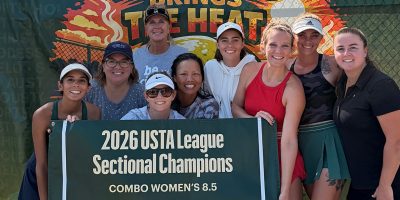
 2026 Combo SectionalsOctober 20, 2026Combo League teams from across Texas met in Corpus Christi to determine the 2026 section championship title. Read More
-
 OTOT: Micah LeeOctober 14, 2026What began as a tentative step onto the court for Micah Lee has evolved into a transformative journey defined by resilience, community, and self-discovery. Read More

Sign up for our Newsletter
Download the USTA App

