Fish, Rinaldi explain role of Davis Cup, Fed Cup captain

Mardy Fish will soon take the bench at the 2019 Davis Cup Finals for his first tie as the U.S. captain. It’s a post he’s coveted since he first experienced the competition as a player in 2002.
“Ever since I started playing professionally and started understanding what Davis Cup was and how special it was, even as a player, I wanted to be the Davis Cup captain,” he told USTA.com after he began the new role in January. “I just thought that position was so cool, leading the guys, leading the team and building the relationships and the team aspect around it.”
Indeed, the captaincy calls for far more than tactical tutelage. One of the highest honors in tennis, the position is also among the most unique in sports.
The job is multifaceted. A captain serves his or her country as coach, high-stakes strategist, talent evaluator, morale manager, chemistry builder and more. At the core, as Fish alluded to, is building strong relationships with players and their coaches.
So what does it take to get the job done right? USTA.com spoke with Team USA’s senior and junior captains to find out: Fish, U.S. Fed Cup Captain Kathy Rinaldi, 2019 U.S. Junior Fed Cup-winning Captain Jamea Jackson and 2019 U.S. Junior Davis Cup Captain Philippe Oudshoorn.
Team-building
“I think a great team captain obviously knows the players, is able to coach each player, and yet brings a team together and has a great connection, great chemistry,” said Rinaldi, who also led the U.S. Junior Fed Cup team to the 2014 title.
Fish, who played high school basketball with Andy Roddick, is confident his background will serve him well in that respect.
“I’m a team-sport athlete stuck in an individual sport, I guess. I love the team aspect of Davis Cup; it’s very, very rare in our game,” he detailed. “We’re very selfish athletes, tennis wise, and you have to be… but being a Davis Cup captain is the exact opposite—building the relationships and friendships and trying to figure out how each player is different, each personality is different, and trying to get the best out of each one.”
As Team USA comes together for a common goal, it helps to cultivate a common mindset and identity, too.
For Oudshoorn, who led the junior Davis Cup team to the final in September, that identity was one of “grit, persistence and fight.” Both he and Jackson had the luxury of a full week of training with their teams prior to the junior finals. (Fish’s Davis Cup squad touched down in Madrid on Thursday, ahead of their Tuesday opener against Canada.)
In that time, Oudshoorn had his young charges read “The Obstacle is the Way,” a book on “turning trials into triumph,” to spark their imagination.
“We have a lot of conversations,” he explained. The guiding question: “By the end of the week, when everyone leaves, what are they going to think of us?”
The former University of Virginia player and, later, assistant coach, draws from his college experience to drive the group dynamic. Like Rinaldi, he spoke to the special nature of team events. “Happiness is only real when shared,” he said, quoting the coming-of-age film “Into the Wild.”
Jackson, a former WTA Top-50 player, also spent some time as an assistant coach at Oklahoma State. During what she called an “invaluable” preparation week, she worked to instill a positive mindset in her players. It was a message that clearly stuck—all three of her players echoed that mentality repeatedly throughout their Junior Fed Cup title run.
Rinaldi also feels a responsibility to create a memorable experience for her teams. “Tennis is a year-round sport, it’s individual... so when we come together as a team, it’s really extra special, and I think the players really embrace that, as well. I think it’s important that the players walk away having a great experience. Win or lose, it should be a great experience, one that hopefully they will treasure forever.”
Coaching
There’s also the unique opportunity to sit on the sideline and coach players through a match. “It will be new for me," said Fish, “but I think I can bring a lot of value in that regard.”
Oudshoorn, who helped guide his team through two match tiebreaks in which they saved a combined five match points, shared his thoughts on adding value from the bench.
“Even on the inside if I’m screaming, I try to still stay calm,” he said. “I think that’s my role, to try and be as objective as possible. So if I get too involved or too emotional with it, then I might lose track of what they really need to be doing.”
He also spoke about the little tips coaches can provide: making sure priorities are straight and reminding the players of basic tactics, like where it’s smart to serve, when to poach in doubles, where to aim returns.
It’s also a balancing act on the bench, particularly at the senior level, working with players who have reached the top of the game without the aid of mid-match coaching. Perfecting the art of saying just enough, while still giving the players space for their usual routines and their own problem-solving, is crucial.
Year-round support, tracking and team selection
The role is also unique in that the captain has a limited window for hands-on work with the team as a collective, even more so now with the one-week finals in both Davis Cup and, as of 2020, Fed Cup.
But captains are plugged in year-round, supporting and following their players.
“As Fed Cup captain, and Junior Fed Cup captain, you’re around the players quite a bit, actually,” Rinaldi explained. “Especially in the juniors, you’re with them. You’re working with the private coaches, just like we do in the pros.
“We’re always tracking them, we’re always watching, we’re always supporting, working with their teams.”
At the junior level, there is an even greater opportunity to supplement the players’ development. Jackson, a USTA national coach, said she and the USTA national staff work with the top juniors from eight to 13 weeks a year, tailoring individual plans to each player.
“[As a supplemental coach], you can hit them a little bit harder because you’ll have breaks,” she explained of the short-burst training blocks at the USTA National Campus. “But it’s harder to have consistency. You have to work really closely with their primary coach, the person who’s put in all this time with them to help make them into the quality person and player that they are. And they deserve so much of the credit. You try and work with them to supplement what they do.”
Ultimately, before each tie or competition, the captains must make the difficult decision on the select few players to represent Team USA. That also carries with it the unpleasant responsibility of informing the players who did not make the cut. Fish did this via phone calls.
For the 2019 Davis Cup Finals, captains could select up to five players as part of their traveling contingent. Fish took the full allotment, as did 14 of the 18 teams headed to Madrid. Of course, with a five-man squad and a maximum of four playing spots per tie (first singles, second singles and doubles), some players may not see any competitive action. Managing those expectations is yet another important responsibility for the captain.
The bottom line
For all the nuances and unique aspects of the job, success is still measured the same as any competition.
“You can get the guys in the right frame of mind, and everyone can be happy and healthy and in a good place,” said Fish, “but the bottom line is you have to win, as well.”
It’s something the U.S. Davis Cup team has done more than any other nation; their 32 titles rank first in the competition’s history. But the last trophy came in 2007, making Fish’s mission clear.
Follow Team USA and the rookie captain on USTA.com's Davis Cup homepage throughout the event.


- Kathy Rinaldi and Jamea Jackson at the 2019 Junior Fed Cup competition.
- Kathy Rinaldi hugs CoCo Vandeweghe after a win against Belarus in 2017.
- Mardy Fish with then-captain Patrick McEnroe in 2004.
- Philippe Oudshoorn coaches Martin Damm at 2019 Junior Davis Cup.
- Captain Jamea Jackson lifts the 2019 Junior Fed Cup trophy.
Related Articles
-
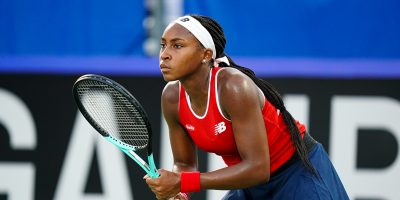
 Coco Gauff, Madison Keys, Ann Li, Taylor Townsend and Nicole Melichar-Martinez will compete for the U.S. Billie Jean King Cup Team vs. Hungary, Nov. 21-22 in Delray Beach. Read More
 -
 Two-time Grand Slam singles champion, current world No. 4 and Delray Beach native Coco Gauff will compete for the U.S. Billie Jean King Cup Team as it takes on Hungary in a pivotal Billie Jean King Cup by Gainbridge Playoff competition in Delray Beach, Fla., November 21-22. Read More
 -
 The U.S. Billie Jean Cup Team is bringing the World Cup of Women’s Tennis back to Delray Beach, Fla., as the United States takes on Hungary in a pivotal Billie Jean King Cup by Gainbridge Playoff competition at the Delray Beach Tennis Center November 21-22. Read More


Sign up for our Newsletter
Download the USTA App

