Q&A: Coach Corey Gauff on daughter Coco Gauff

Corey Gauff has been driving his daughter's tennis journey since she started playing the sport at age 6. But his role became even more hands-on when he left corporate America five years ago—June 13, 2016, to be exact—where he was working as a healthcare executive. It's a date he remembers well, and an anniversary he makes sure to celebrate.
"My wife and I usually have a cocktail," he said with a laugh, speaking with USTA.com just after the five-year anniversary of that date.
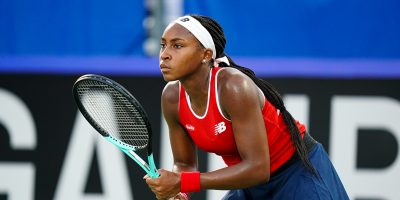
Coco Gauff's recent form is also something to be celebrated, with her run to the French Open quarterfinal capping off a stellar clay-court season that also included a semifinal at the WTA 1000 Italian Open and a sweep of the singles and doubles titles at the WTA 250 event in Parma, Italy. Before she reached her first career Grand Slam quarterfinal, the 17-year-old was named USTA Player of the Month for May for her success in the buildup to Paris.
As she steps up her Wimbledon preparation, Gauff will play the WTA 500 event in Eastbourne, United Kingdom, next week before heading to London. She enters the grass-court season at a career-high WTA ranking of world No. 23.
But before his daughter returns to competitive action, Corey spoke at length about her run at Roland Garros run and on the European clay. He also took time to discuss the coaches who helped shape Coco's game and mentality as a youngster, and how she grew up as a multi-sport athlete and progressed through the USTA's QuickStart program (now Net Generation) as a young tennis player. A former Division I basketball player at Georgia State, Corey also explained how that experience influences his coaching style today, and how he relearned the game of tennis after competing in his youth. Read on for a lightly edited version of the conversation.
Q: Now that you've had a little bit of time to digest Coco’s quarterfinal run at the French, how do you look back on that on that performance?
Corey Gauff: She was playing pretty solid leading up to the clay court season and getting better. It's a great result for her, being really young and competing really well. We’re obviously disappointed that we didn't go further. I thought we had opportunities in that quarterfinal match to win the first set, and then you've definitely got an opportunity to close out the match. But we'll learn from it and get better because of it.
She had a really good clay-court season, and really all year, she's been getting better and better on the court, and the match play is certainly making her sharper. So it's exciting to see where she's going to go from here.
Q. Did this run, speaking particularly about the about the French, feel different to you than some of her previous deep runs at the Slams. She mentioned a few times in the press that it was a more professional job, a lot of clinical straight-set wins instead of some of those roller coasters that she's had in her other deep runs. Did it feel the same to you, that it was a more professional performance all around?
Corey Gauff: Yeah, you know, she's growing. When she was 15, she went to the fourth round, the third round, the fourth round the first couple of Slams before she turned 16. So a lot of that was pure adrenaline and just competing with a lot of heart, but not a lot of mental engagement and discipline. It was just a lot of excitement. So I think now, she's approaching it much differently, staying engaged mentally for the entire match, doing a better job executing a game plan. We're not where we want to be, but for sure, she's able to digest a scouting report and execute in a match.
Q. On a similar point, do you think her mindset is different now, now that it's been about two years since the Wimbledon breakthrough? That was very much a whirlwind where she became an overnight star—at least for people that are not big tennis fans, who weren't following her all along the way. She even mentioned in press that she was happy to be there when she was getting to that third and fourth round at Wimbledon, the US Open, the Australian Open. So now that she's a Top 25 player, she's been at it for a while at the pro level, do you sense a change in the mindset to where she feels like she should be winning now? How has she handled that?
Corey Gauff: I think the confidence that she can beat anybody always... she has a tremendous amount of self-belief that you can't coach. You just try to instill that as a parent. As a coach, you just try to equip them with the tools to be as successful as they want to be. I think that now, the approach is... she's focusing on her craft and making sure she's able to improve every time she gets on the court and feeling more comfortable that, you know, really there's nothing that my opponent can do that I can't handle.
As we continue to improve different aspects of her game, I think that makes her feel more comfortable going into the match, knowing that she's got a lot of ways she could win the match. She doesn't have to count on just being defensive, doesn't have to count on just being offensive, or her serve. There's a lot of ways that he's execute and get through the match. I think the most important thing this time was she was able to win matches when she wasn't playing great. When you can do that, you start to really become a solid player.
Q. Another thing that caught my attention in her press conferences is when she was talking about the importance of turning weaknesses into strengths. She particularly mentioned her serve, that she felt that in the past month or so, she's really cleared a hurdle with her serve and that's really becoming a strength all the time. Of course her first serve has always been a big a big weapon, but she seems to have a lot of confidence in the second serve as well now. Do you agree with that, that she's broken new ground with the consistency on the serve?
Corey Gauff: Yeah, I think it's still evolving. I think we're there from understanding what she does well and what her mechanics need to be. But I think that she's become more solid on the second serve. She's never been a kid who’s just trying to just get in the box—she's always trying to do something with her serve and, you know, it leads to double faults.
When I look at the data and look at how she's performing, I've got to look at how many times she wins her second serve on a forced error from the serve or a first-ball winner. I personally, obviously, hate double faults and don't want her to have any. However, I understand that you don't want to be just predictable or your second serve.
You kind of look at the tour, everybody that has a big first serve, they tend to double fault a little bit more. They're a little bit more aggressive on their serves. And so there's no right or wrong. Time and score become important. Understanding your opponent, what they like to do, but also being able to rely on two or three serves that you know that you could make at any time, and you're not going to be on defense.
Q: Apart from the serve, are there any other particular areas right now that you're that you're focusing on?
Corey Gauff: My approach has always been to focus on all aspects of the game. We've played a lot of doubles, as you know, and continue to try to play doubles because at the end of the day, doubles is a great way to improve your singles game. You play a lot of pressure points, you get to volley a lot more, you get to serve under pressure. We want everything to get better.
One of the obvious things right away that we've really tried to focus on this year is getting her footwork and her balance together because she's often off-balance. This is the first year that she's been the same size, you know (laughs). She's been growing. Now she hasn't grown vertically; she's gotten stronger, obviously, from that respect. But in terms of her length, arm span and her height, she's been the same size for a while, so now we're really trying to get the footwork much better, so it's more smooth. And it'll get better with time. It’s improved tremendously this year because she understands the importance of it. But as that gets better and better, it just makes everything a lot easier.
PHOTOS: Coco Gauff through the years (Q&A continues below)
Q: Just looking back a little bit, back to the month of May with the semis at the Italian Open, sweeping in the singles and doubles in in Parma, and then rolling that over to another strong performance in Paris. As a coach, how pleasing is it to see that consistency over a stretch? We've all seen the incredible matches and runs at individual tournaments, and of course the title in Linz. But to see it week in, week out, over the course of a month against some really top players... How pleasing is that for you as a coach?
Corey Gauff: It's tremendously satisfying to see that. It’s about trying to increase your baseline of performance, making sure it's higher and higher. Ultimately, that's what's going to help you win tournaments because in a two-week span—obviously the target for us it to win Grand Slams—in a two-week span, you're not going to be at your best for seven matches. So you've got to get through those matches where you're not feeling as good or playing as good. So your baseline of your performance has got to keep getting higher and higher so that you don't dip below that because you're not engaged mentally or you're not prepared physically.
So it's very satisfying to see that, day in and day out for the past month, she's been able to lock in and really compete. We still have mental lapses in some matches, as we saw in the quarterfinals, where we don't play really good tennis. And, she's still young, but she's growing and she'll learn from that, that you can't afford to do that when you're competing for a title. These girls are older, they're more experienced, they've been there a few times and they're going to sense that and they're going to try to seize the moment.
I was pleased in the quarterfinals, after going down 5-0 in the second set, she found a way to get back to 5-3. Who knows, she breaks serve there and gets back on serve, she's back in the ballgame. But that's a tremendous message because a lot of times, a lot of women on tour, a lot of young girls her age, they tap out. But she kept fighting and trying to figure it out and find a way to win. You take that with you into the next tournament the next time you play that you're never out of it.
Q. Going back to when Coco was growing up… I spoke with Jewel Peterson recently, and she was telling me how Coco used to nap in her car on the way to practice at 7 years old. But more interestingly, she was saying that her spirit and her motivation, her preparedness was off the charts, even at 7. What do you attribute that to, having that at such an early age? How much of that is nature, how much of it is nurture?
Corey Gauff: I think it's a combination of both. For whatever reason, God has put the right people in our path at the right times. She's always had this ability to focus for much longer periods of time than other folks her age. If you could get a kid at a young age to concentrate for 35, 45 minutes at a time, you can accomplish a tremendous amount.
Jewel Peterson came into our lives when Coco really needed a strong female mentor that was spiritual and factual. Jewel was great; she gave her this unbelievable self-belief. I mean, when she's down 5-0 and she comes back to 5-3, that's all instilled in her from Jewel saying, 'Never say die.' She grew up believing that she's always got a shot; no matter what the score is, she can come back. And she has come back. We've seen it on the tour that she's come back after she was down and out.
Jewel did a great job. She would pick her up from school. If they got rained out, they'd watched film together, some of the greats. Of course the Williams sisters, Sharapova, Henin. She'd watch them and how they fight, and try to develop the mind at that age, that self-belief that you're going to need later. We love Jewel. She was tremendous for us.
Q. I know you and your wife had both have a great sports backgrounds, but not particularly big tennis backgrounds. So how did you go about educating yourself in the game as you started to take on a larger role in coaching?
Corey Gauff: I think a little-known fact is that I played a lot of sports. I was a typical American child. I played football, baseball, basketball and tennis, and track. And I think the combination of my wife being in a sport like track—and gymnastics was her first sport—technical efficiency and instruction was very important in track, very important in gymnastics.
In my time playing tennis, I went to an academy after school and played competitively for almost two years. And that little bit of instruction proved to be enough to make me feel comfortable about what needed to happen to be successful in tennis.
Before Jewel Peterson, we had a guy named Coach Little out of Atlanta. Actually he was an electrician, but he was a certified professional tennis coach. We asked him to work with her—because I was focused on corporate America, I wasn't thinking about tennis. He started practicing with Coco and he just made her fall in love with the game. And while he was helping her fall in love with the game, he was teaching me the game. Because when I stopped tennis, it was still very much a serve-and-volley game, with McEnroe, Pat Cash. Nobody really played with Western grips when I was playing, and most of the guys had one-handed backhands.
So he really did a good job of coaching me and shaping me. He knew he wasn’t going to be the long-term coach. He said, "I'm going to get you started, get her situated, show her backhands and forehands, so that when the next coach gets her, she'll have a good foundation.” And that proved to be true with Jewel Peterson and then Gerard Loglo. We still go back to Gerard Loglo in Florida and that proved to be a great combination. And we also spent a lot of time with a coach named Sly Black. So those four people were tremendous in her formative years.
Q. Did she start with the red, orange and green-dot balls—the bigger, softer balls?
Corey Gauff: Yeah, it's funny. People think she skipped steps, but I always remind parents, "No, Coco didn't skip one step." She did every step, she just want through them fast. She played QuickStart, she just didn't play long. She played junior tennis, she played ITF tennis, she just didn't play that long. She had success early and moved to the next level.
Q. Did Coco play a lot of other sports growing up?
Corey Gauff: We let her play everything. She was doing gymnastics. I was excited about it, but my wife was like, "It's not gonna work, she's not gonna be a gymnast." I said, "Huh? You can't tell her that." But there are no 5-foot-10 gymnasts (laughs).
Gymnastics was her first love. And then she ran track, she played basketball. She liked both of them but it just reconfirmed her love for tennis. I think she liked those sports, but it wasn’t something she wanted to go to college to play or go pro in. She was definitely pretty good in track. She’s got long legs, she’s fast. She just looks like a 400-meter of 800-meter runner.
Q. I didn’t know you played competitive tennis, but I know basketball was your main sport and you played Division I basketball at Georgia State. With your background at a high level in a team sport, how does that influence your coaching style today?
Corey Gauff: Well, I think something to remember is that all team sports start out as individual sports. You can't help the team unless you, individually, are able to contribute. So you have to focus on your craft so the team can be better. The other thing, because I played college basketball... I didn't start in basketball. I played football and baseball and tennis before I was a basketball guy. I didn't become a basketball player until I was in high school, because I didn't want to play football anymore. So my development in basketball, I had to put a lot of hours in by myself to learn how to play, to catch up, because I was behind the game.
That kind of influenced when I was working with Coco. If you put enough hours in do it correctly, you can you can develop really fast.
And then my wife was an All-American at Florida State, a Junior Olympian. She had all the pedigree. So we combined the two mindsets.
Our kids had to play a sport. They didn't have to play our sports—tennis wasn't our sport. But they had to play a sport, and we committed that we're going to make sure that they get the best instruction and give them the best chance to be as good as they want to be. Because for us, when we started it, you know, both my wife and I went to college for free as scholarship athletes. So that's the minimum requirement for our kids, that you go to college for free (laughs). If you want to go further, like Coco, then if you invest the time and have the discipline and you can go further.
Your initial question was how that influenced my coaching. It's the self-belief that you can achieve anything; you can be good at anything if you’ve got a pretty good athlete and a pretty good commitment. You give them proper instruction and they can get pretty darn good.


- Coco Gauff at the 2017 US Open, where she reached the girls' final before losing to Amanda Anisimova.
- Champion Coco Gauff and finalist Caty McNally after their 2018 French Open girls' singles final.
- Coco Gauff and Caty McNally pose with their 2018 US Open girls' doubles trophies.
- Gauff at the 2018 US Open, where she competed in the Qualifying Tournament in women's singles.
- Coco Gauff at the 2018 Orange Bowl, where she won the prestigious girls' 18s title.
- Gauff at Wimbledon in 2019, where she broke through by defeating Venus Williams and reaching the fourth round.
- Gauff at the 2019 US Open, where she reached Round 3 before falling to defending champ Naomi Osaka.
- Coco Gauff after winning her first WTA title in Linz, Austria.
- Coco Gauff at the 2020 Australian Open, after she defeated Naomi Osaka in Round 3.
- Coco Gauff at the 2021 French Open, where she reached the women's singles quarterfinals.
Related Articles
-
 Two-time Grand Slam singles champion, current world No. 4 and Delray Beach native Coco Gauff will compete for the U.S. Billie Jean King Cup Team as it takes on Hungary in a pivotal Billie Jean King Cup by Gainbridge Playoff competition in Delray Beach, Fla., November 21-22. Read More
 -
![Visit the WTC team announced page]() The United States Tennis Association (USTA) announced the players and coaches who will represent the United States at the 2026 BNP Paribas World Team Cup, to be held Sept. 16–19 at the USTA National Campus in Orlando, Fla. Read More
The United States Tennis Association (USTA) announced the players and coaches who will represent the United States at the 2026 BNP Paribas World Team Cup, to be held Sept. 16–19 at the USTA National Campus in Orlando, Fla. Read More -
 The U.S. Billie Jean Cup Team is bringing the World Cup of Women’s Tennis back to Delray Beach, Fla., as the United States takes on Hungary in a pivotal Billie Jean King Cup by Gainbridge Playoff competition at the Delray Beach Tennis Center November 21-22. Read More

Sign up for our Newsletter
Download the USTA App

