Q&A: Jody Holsinger reflects on officiating, cancer recovery and power of tennis

As the unsung heroes of tennis, officials work to ensure fair competition in every match. USTA Heart of America is highlighting Jody Holsinger as part of Officiating Appreciation Week on April 19-25.
Holsinger is a longtime certified official and player. She is also the USTA Heart of America vice president of adult tennis.
Holsinger, 60, recently underwent treatment for cancer. She credited support from her family and teammates, as well as the sport of tennis, for staying healthy and remaining positive in her recovery. In fact, after her cancer treatment, she had extensive blood work done that revealed her metabolic age is in the 40s. She credited tennis, lauded as the World’s Healthiest Sport, for playing a large part in keeping fit.
Here, Holsinger reflects on her role as an official and the importance of the position to the sport. She also details her return to the court as a player and why she continues to volunteer for the USTA despite a busy and fulfilling schedule.
What has kept you committed to officiating with the USTA?
As an engineer by education, I’ve always been drawn to the rules and structure of sports. The precision of rules creates uniformity and fairness, and that’s something I value deeply. When I played club volleyball after college, I loved being on the officials’ stand. So when I took up tennis at age 49, I was naturally drawn to officiating again.
I enjoy having a role in ensuring the game is fair for everyone. But what keeps me most committed — especially at junior tournaments — is the opportunity to help shape young players. Creating a positive on-court experience through good sportsmanship and following the code can influence them far beyond a single match.


Tennis is such a great lifetime sport. I hope by helping youth have positive experiences they’ll continue playing for the rest of their lives.
After your recent health journey and cancer treatments in 2025, how did staying involved in tennis help you physically and mentally?
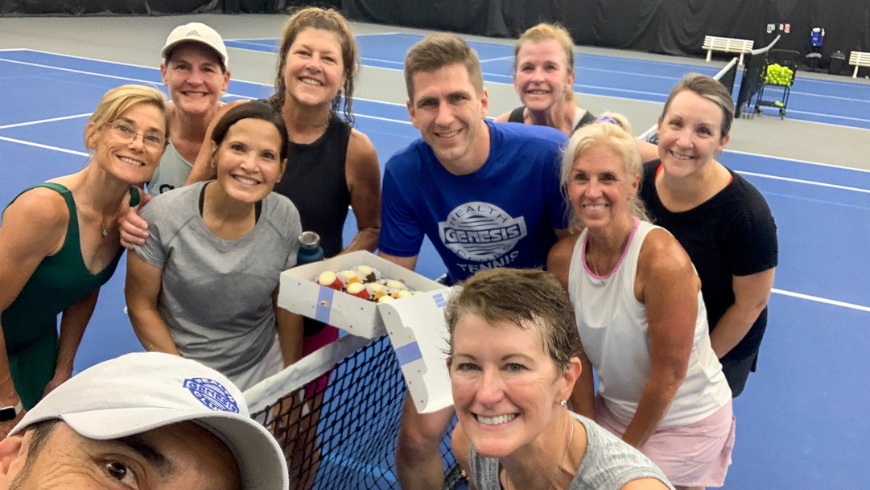
Tennis was one of the primary drivers in maintaining both my physical health and my emotional well-being. Many of my closest friends come from the tennis community, and their support meant everything during my six months of chemotherapy. My oncology team encouraged me to stay active to help minimize fatigue, and tennis gave me the motivation to do just that.
But it did much more than keep me moving. My teammates and competitors followed my journey, encouraged me and showed me grace as my energy and level of play declined. When they surprised me by showing up to celebrate as I rang the bell at the end of treatment, it truly meant the world to me.
With both my family and my tennis family surrounding me, I never felt alone. Tennis kept me strong — physically and mentally — through the entire journey.
Do you credit tennis to your overall health?
I absolutely credit tennis as a major contributor to my overall health. I’m a big believer in the research showing tennis players often live longer, healthier lives. The sport supports cardiovascular fitness, strength, mental sharpness and — equally important — social connection.
My husband Trevor and I prioritize good nutrition and fitness. And after finishing chemotherapy, I wanted a clearer picture of my recovery. Through comprehensive lab testing, I learned my metabolic age measured nearly 17 years younger than my actual age.
That was incredibly encouraging, especially after such a challenging year. I believe consistent tennis, combined with a healthy lifestyle, played a significant role in those results. It also motivates me to continue making choices that support long-term health.
In addition to officiating, you volunteer as vice president of adult tennis for USTA Heart of America. What motivates you to continue giving back to the sport in all the ways you do?
My home-based business gives me the flexibility to devote time to things I’m passionate about. And helping others live healthy, active lives is at the top of that list. Tennis has given me so much — friendships, community and purpose — and volunteering is my way of giving that back.


- 1
- 2
- 3
I want others to discover the same joy I’ve found in the game. Whether I’m playing with someone, competing against them or helping create opportunities through volunteer leadership, I hope to create positive experiences that keep people engaged. If someone sticks with tennis because they feel welcomed and encouraged, I feel like I’ve made a meaningful difference.
Anything else you’d like to add?
It’s never too late to start playing tennis. I began at age 49. And 10 years later, I’m more passionate about the sport than ever. I fully plan to keep playing for another 20 to 30 years. Tennis truly is a lifetime sport, and I’m living proof that it’s never too late to jump in.
Check out more stories from across the USTA Missouri Valley celebrating officials by clicking here. Learn more about the benefits of playing tennis by clicking here.
Related Articles
-
 National Spotlight in KCOctober 06, 2026Scott Hanover has helped make Overland Park Racquet Club a destination for USTA Level 1 national tourneys, continuing Kansas City's tradition of hosting elite events. Read More
 -
 Coach Will GrossOctober 02, 2026Will Gross found his passion for tennis as a player and now helps juniors and adults discover the same joy and lifelong connection to the sport at Match Point KC. Read More
 -
 Squash Star Finds TennisSeptember 09, 2026After years as an elite squash player, Chris Jung discovered a new racquet-sport community in Kansas City, helping a Woodside tennis team to a national championship. Read More
Sign up for our Newsletter
Download the USTA App

