'Public park kid' Jimmy Connors reflects on how they shaped him and his tennis
In his nearly 25-year playing career, International Tennis Hall of Famer and former world No. 1 Jimmy Connors was known for being a maverick, a gritty battler, and a showman—someone who always got people talking one way or another.
The eight-time Grand Slam singles champion attributes some of that trademark toughness to honing his skills as a youngster in public parks—where more than half the tennis in the U.S. is still played in to this day.
This self-described “public park kid” grew up in East St. Louis, Ill., just across the Mississippi River from the Missouri capital, and was raised to play the game by his mother, a teaching pro named Gloria Thompson Connors, and grandmother Bertha Thompson. Undersized in his youth—he eventually grew to 5-foot-10—Connors’ heart was always bigger than his body, something that was apparent even when he first held a racquet in his hands. But that wasn’t the only way in which Connors maximized his potential. His game, persona and never-say-die reflected the venue that raised him, too.
Connors was never much of a country club guy. Maybe that’s why he was so beloved by so much of the country. He was what they came for, after all.
“It prepared me for what was to come: the tougher, the better,” he says. “My mom, my grandma and my grandfather who trained me gave me that. ‘Listen, you go there and play.’ There, nothing's easy. You gotta work for it. You gotta be prepared for anything. Some places I was playing, they had wire nets. People said, ‘A wire net, what's that?’
"It just prepared me for a lot of things that were to come not only on the tennis court, but also in my life.”
Connors’ prodigious talent was evident early: He played in his first U.S. national championship when he was only 8 years old. But as he grew up into one of the game’s greatest champions, first as a junior and then as a professional—he still to this day holds the Open Era men’s singles record with 109 tour titles won—on its grandest, and sometimes, stuffiest stages, the courts of East St. Louis were always a place for him to call home.
 Photo by Jennifer Pottheiser/USTA.
“Things really weren’t made that easy back then. You had to figure out a way to get on the courts and then to make the most out of your time,” he says, recalling memories of “having to jog a quarter-mile to get a drink of water,” before rushing back to the courts.
“The whole picture of being a public park kid was for me sitting around and waiting for a court, trying to jump on for 15 minutes, every chance I could get. But that's just not me. … A lot of guys growing up, they went with their parents to the courts and took the opportunity to play whenever they could.
“But that kind of defined my attitude and my feelings towards the way that I wanted to play and approach the game. I wouldn't change that for anything.”
Related Articles
-
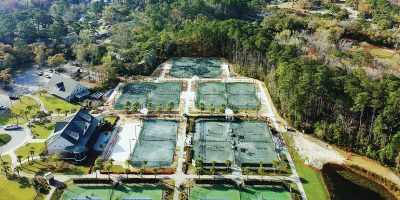
 TVS transforms WaccamawOctober 02, 2026A dedicated local advocate leads the charge to expand and renovate the courts at Waccamaw Regional Tennis Center in South Carolina. Read More
 -
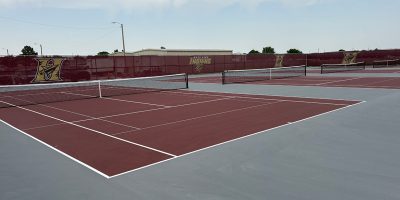
 TVS renovates Hays H.S.September 30, 2026With support from USTA TVS and the Missouri Valley section, Hays High School’s new and renovated tennis courts are proving transformative. Read More
 -
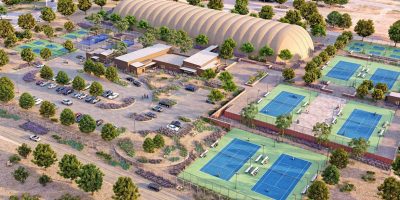
 2026 Featured FacilitySeptember 01, 2026Forked Lightning Racquet Club is one of 41 recipients honored for excellence during 2026 US Open. Read More
Sign up for our Newsletter
Download the USTA App

