Growing the Grassroots: The USTA's Community Tennis Development Workshop and Impact Conference
This story is courtesy of Racquet Sports Industy magazine.
In February, the USTA brought back a key conference and workshop that, in the past, had a huge influence on grassroots tennis growth in the U.S. The USTA Community Tennis Development Workshop, last held about 10 years ago, was this year combined with the USTA Foundation’s Impact Conference for three packed days of presentations from experts and peers with practical approaches to growing the game at the grassroots and advocating for tennis locally.
The combined event attracted more than 600 attendees from across the country to the Gaylord Texan Resort and Conference Center in Grapevine, Texas, near Dallas-Fort Worth airport. It was the fourth edition of the annual Impact Conference, presented by the USTA Foundation (ustafoundation.com), which is the social impact arm of the USTA that combines tennis, education and mentorship to help prepare young people from under-resourced communities for their futures. The Foundation also is the home of the National Junior Tennis & Learning (NJTL) program.
The event also marked the return of the USTA Community Tennis Development Workshop (CTDW), which for years had been a key event on the calendar for tennis providers such as Community Tennis Associations (CTAs), parks & recs, schools, and other community tennis leaders as a forum to share ideas, network, build great coaching and programming, advocate for tennis locally and much more.
Becoming ‘Provider First’
The rationale for connecting the CTDW and the Impact Conference is straightforward. “We should be learning from each other, not operating in silos,” Brian Vahaly, USTA Chairman of the Board and Interim Co-Chief Executive Officer, told the attendees at the opening session. “We know CTAs and NJTLs are both driving tennis in their communities. It’s critical when you leave here that you have a deep understanding of how the USTA can help. You represent access, you represent experience. This supports our ambitious goal of 35 million players by 2035.”
Vahaly told the audience that the USTA will “look different. We will be ‘provider first,’ focusing on our sections and focusing on the people out there delivering the sport. Everybody in here should know the power this sport can provide. We need our providers to succeed. We want more and more money going down to the ecosystem, not caught up in the bureaucracy.”
 USTA Chairman of the Board and President Brian Vahaly delivers opening remarks at the combined CTDW and Impact Conference. Photo by Fred Mullane/Camerawork USA.
In the reach-out to providers, Vahaly talked about USTA Coaching. “Coaches are the delivery system of our sport, and for too long we weren’t doing enough to support them,” he said. “We know that when players find a coach that they love, they are more apt to stay in our sport.”
He also mentioned the larger investment into tennis facilities. “In past years, we were only spending $1 million to $1.5 million. We’re now spending over $20 million to improve facilities. We now have data … when people see new courts, they want to get out there and play. We’re putting more dollars into our ecosystem,” Vahaly said.
The conference also was bolstered by the recent good news on the participation front (see page 26), with more than 27.3 million players as of year-end 2025, a sixth consecutive year of participation growth. Along with that, there were increases in “core” players and play occasions, in addition to key tennis participation gains for diverse populations.
“The momentum behind our sport and our organization is real, and it belongs to each of you,” he concluded. “You’re making tennis feel welcoming and accessible. Tennis is absolutely stronger than ever. What we’re doing matters. I’m incredibly proud to be in this with you.”
 Players from the Dallas NJTL hit the courts. Photo by Fred Mullane/Camerawork USA.
Impacting Community
The USTA Foundation also took center stage, with CEO Ginny Ehrlich discussing how the Foundation works to “transform the lives of young people from under-resourced communities.” There currently are 272 NJTL chapters throughout the U.S., serving nearly 234,000 young people with about 20 hours per week of educational programming and 25 hours per week of physical activity (which includes nearly 50,000 kids who played tennis for the first time).
“Ninety-five percent of our young people said they strengthened their social-emotional learning skills through NJTL,” she noted, “and 89 percent said they received quality youth development support.” Ehrlich also pointed out that 98 percent of NJTL youth graduate from high school on time, and 85 percent enter post-secondary education.
Core NJTL programs, in a variety of formats, include afterschool programs and summer learning opportunities. The Foundation also has the Williams Family Excellence Program, which supports high-performance training and competition, college scholarships, and career pathways and development.
And the Foundation supports a new initiative—Community Impact Hubs, which currently enables 10 NJTLs to expand by adding family tennis, before and afterschool programming, coach recruitment and training, and expanded court access. “The projection is by the end of 2027, we’ll reach 630,000 young people and adults through [the Community Impact Hub] program,” Ehrlich said.
A highlight of the weekend was a conversation with Martin Luther King III and Arndrea Waters King, the co-founders of “Realize the Dream,” moderated by L.A. Times journalist LZ Granderson. Realize the Dream is a national initiative that calls on people to turn small moments into acts of service that strengthen community and honor the legacy of Dr. Martin Luther King Jr., promoting positive change through service and volunteerism.
The organization has a goal of reaching 100 million hours of service by Dr. King’s 100th birthday in 2029, and the USTA Foundation has pledged 800,000 service hours by the end of this year in support of that goal. “Dad was very concerned about building community,” said King III. “Sports has the capacity to bring people together.”
The Impact Conference/CTDW agenda included general sessions on attracting entry-level adult players, moderated by Simon Gale, the USTA’s Senior Director–Racquet Sports Development; building a “best in class organization,” with USTA Chief People & Culture Officer Henry Lescaille; and “Data-Driven Advocacy for Community Impact,” with Patrick Briaud, USTA Managing Director–Tennis Advocacy.
“Reimagining Coaching” was presented by Megan Rose, USTA Coaching Managing Director and Head of Business Development, who outlined three key priorities for 2026: Recruiting new coaches under 35 years old; having 20 percent quarterly active users across the USTA Coaching ecosystem; and signing up 12,500 coaches in the USTA Coaching community.
Reaching the Grassroots
Breakout sessions ran the gamut for tennis organizations and providers, covering coach recruitment and retention, succession planning, advocacy tools, empowering volunteers, using data effectively, engaging staff and volunteers, launching profitable tennis programs and much more. The Resource Fair highlighted vendors including Babolat, Head, Wilson, Court Reserve, Diadem and Save My Play; USTA volunteer committees such as CTAs, Parks and Advocacy; and USTA departments and programs including digital tools & resources, research & analytics, USTA Coaching, SafePlay and more.
Former national board member Emily Schaefer of the Houston Tennis Association was instrumental in leading the task force to bring back the CTDW. “The people I saw from old CTDWs, and now this new one, are all very excited. You just can’t match the energy of having so many grassroots tennis people in one space.”
 Martin Luther King III, his wife Arndrea Waters King, USTA Foundation CEO Ginny Ehrlich, USTA Foundation President Kathleen Wu and USTA Chairman of the Board and President Brian Vahaly with players and staff from the Dallas NJTL. Photo by Fred Mullane/Camerawork USA.
“So many people have come up to me and said the CTDW was the best thing the USTA did,” added Ted Loehrke, the USTA Managing Director–Head of Section Partnerships. “So, we’re happy to bring this back.” Plans for future conferences are being discussed.
“This conference gave me a better understanding of how to serve and makes me appreciate who I’m serving, and what I’m doing to serve,” said Jennifer Guiles Robinson of the Ron James Youth Tennis Program, an NJTL in Florence, S.C. “It’s about more than tennis; it’s about advocacy and impact.”
“I always try to come back with ideas I can implement,” noted Richard Evans of the Lake Travis Tennis Association in Texas. “This has given me great ideas, and the interaction with peers is outstanding.”
A discussion with USTA Eastern Executive Director & CEO Amber Marino and U.S. Army aviation officer Rumeal Lewis, an NJTL alumnus, covered the impact of NJTLs and this sport. “It’s not just about tennis,” Lewis said. “It’s about everything else. I remember some of the times I played tennis, but I remember all the interactions from the people more than anything. It’s important to focus on the people aspect.”
“I definitely second that,” added Marino. “It’s about the ordinary stuff. This is why I love the sport. Get to know the people, get to know your community. When you can build that community support, it just makes a huge difference.”
Related Articles
-
 Ahsha Rolle: BHMFebruary 27, 2026Ahsha Rolle, former professional tennis player and current executive director of tennis at New York Junior Tennis & Learning (NYJTL) and the Cary Leeds Center for Tennis & Learning, pens an essay on the importance of being a role model and giving back so the next generation can thrive. Read More
 -
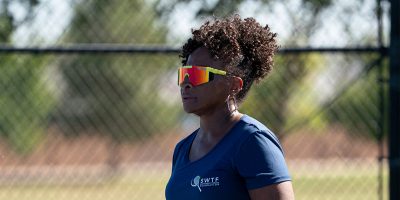
 Damita Curry: BHMFebruary 25, 2026Damita Curry, the executive director of the Southwest Tennis Foundation (SWTF) and a member of the USTA National Advocacy Committee, writes a first-person essay on what tennis means to her, especially during Black History Month. Read More
 -
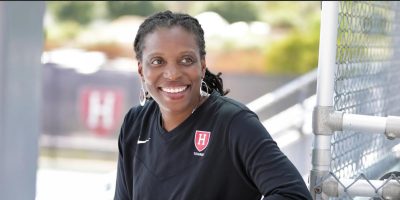
 Traci Green: BHMFebruary 20, 2026Traci Green, a USTA Board Presidential appointee, volunteer on the USTA Collegiate Pathway Committee and head coach of the Harvard women's tennis team writes a first-person essay on what the sport means to her. Read More

Sign up for our Newsletter
Download the USTA App

