How to tackle the heat and summer travel with Page Love and Mark Kovacs
Each month, the USTA hosts Net Generation webinars for parents to learn how to best support their children throughout their tennis journey from finding coaches to improving their mental fitness. These webinars feature experts in their field, such as coaches, psychologists and current and former professional players.
In the June webinar, “Heat, Travel, and Recover: Mastering Tennis Wellness Strategies on the Road,” renowned sports nutritionist Page Love and esteemed sports scientist Dr. Mark Kovacs, joined the USTA’s Karl Davies, Ph.D, director of community education and parent support, to educate parents on the best ways to ensure their child is safe, healthy and happy while playing in difficult conditions.
Here are the top takeaways from their conversation and seven ways to manage the various conditions and situations that arise during the summer tournament season.**
#1 - Do your research on the location you’re visiting.
Whether you’re traveling within your state or to another country, it’s important to do research ahead of time on what to expect, from weather conditions to whatever food is available at restaurants and local grocery stores. You don’t want to be caught off-guard if the local chains don’t carry your athlete’s favorite sports drink or recovery snack and you didn’t bring extras.
Additionally, if the heat, humidity, altitude or time zone is vastly different from what your child is used to, try to arrive as far ahead of the tournament as possible in order for them to acclimate to the conditions.
#2 - Adjust to time zone changes ahead of time.
If you’re traveling over more than three time zones, encourage your child to start adjusting to that time zone a few days prior to arriving at the tournament.
 Photo by Victor Estrella.
Go to bed and wake up in the new time zone, and eat meals at the times you would likely eat over there in order to ensure that they will be well-rested and properly energized for competition. Additionally, while traveling, try to ensure that they don’t sleep or take naps during times they would be awake over there. That can be hard during a red-eye flight, but leaving at midnight could be the middle of the day at your destination.
#3 - Spend time outside or do some light exercise upon arrival.
After spending time in the car or on a plane, going outside and getting sunlight is important to help the body remain awake and alert, especially if the time difference is substantial. Exercise is also important to improve circulation after a long travel day, but an intense hitting session may not be the best way to go. Instead, going for a run, stretching or another low to moderate intensity workout will help them adjust and get the blood moving, while explosive movements and sprints could cause more harm than good.
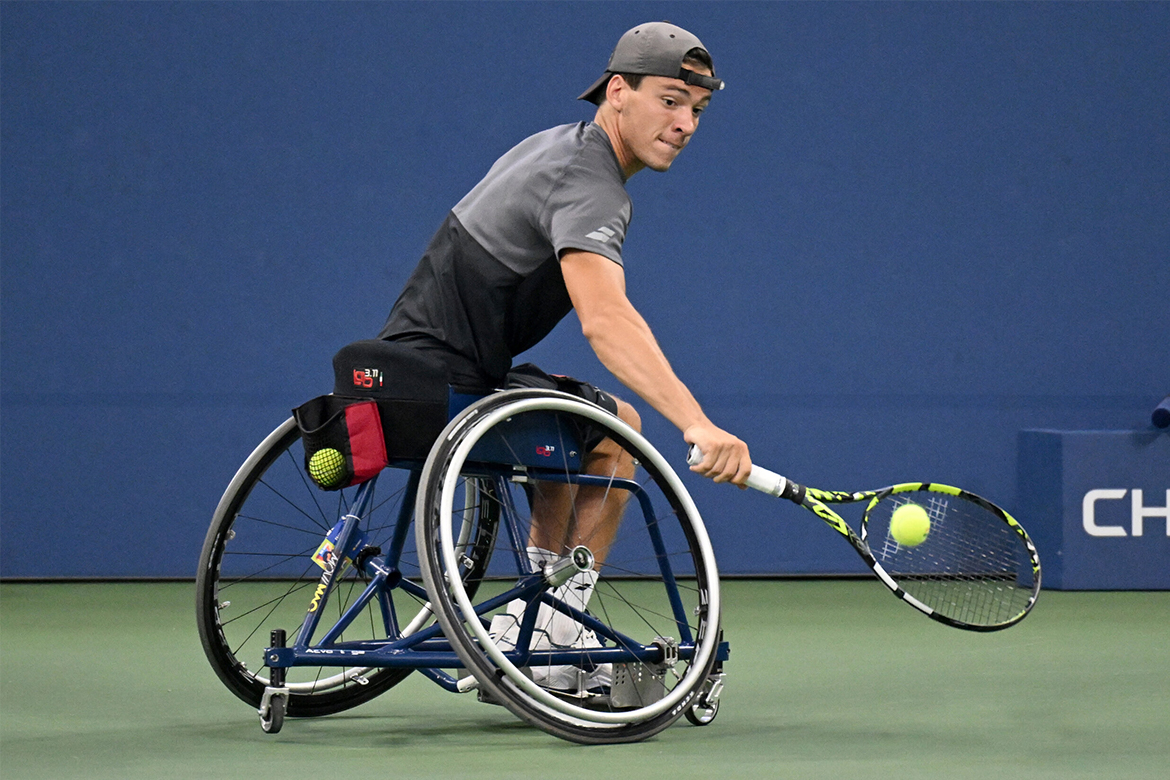 Francesco Felici in action during a junior wheelchair boys' singles championship match at the 2023 US Open. Photo by Rhea Nall/USTA.
#4 - Keep moving and stay hydrated on plane rides.
Long plane rides are often necessary while traveling, but they can make things difficult upon arrival. In order to keep the blood flowing, have your child walk up and down the aisle of the plane when it is safe to do so, or have them do exercises in their seat—there are plenty of various resources online.
Additionally, it’s easy to get dehydrated on planes due to the altitude and desires to not get up or use the restroom during the flight, but your athlete needs to keep up their water, sports drink or juice intake to remain hydrated and stay healthy. Keep salty and grain-forward snacks such as pretzels on hand in order to help retain water.
#5 - Be prepared in case gastrointestinal issues arise.
You can’t always predict an upset stomach, but there are a few ways to prevent and quickly recover from GI distress, which is more likely when consuming unfamiliar foods in new countries.
First, bring probiotics that can help heal and repopulate the gut with healthy bacteria after illness—and some players on tour even try to stave off GI troubles by taking probiotics before traveling.
If your child does fall ill, ensure they’re consuming enough liquids, particularly if they are vomiting or have loose stool. Besides that, the best foods to consume are plain pasta, white rice, white bread, or bland fruits like melon and banana. While these may not be on a typical training diet, they help to calm the stomach down, which is the most important thing to get your athlete ready to compete again.
#6 - Ensure your player is hydrating properly before, during and after their matches.
Hydration is key for athletes, especially in the summer heat. We recommend using a urine color chart to determine if your player is drinking enough water (although take note of exceptions, such as those who take vitamin D supplements).
Athletes can also use sports drinks and juices to hydrate themselves. For sports beverages, low-sugar options are not recommended due to the amount of energy these high-performance juniors expend on-court. For water and sports drinks, they should drink a large water bottle at breakfast and another up to two hours before they get on court. During the match, they should try to drink at least a cup to a cup and a half every 15 minutes or every changeover, and then have as much water or sports drink as they can post-match.
 A junior player hits a backhand at the 2022 Junior Team Tennis National Championships. Photo by Warren C. Leimbach/USTA.
A good rule of thumb is to drink half your body weight in ounces of water—if your child weighs 120 pounds, they should have about 60 ounces of water per day. However, hot and humid conditions lead to more sweating and fluid loss, so water consumption may need to be increased based on the weather, if they are a heavy sweater and the intensity of their matches.
#7 - Pack plenty of extra snacks and foods that your athlete likes.
You can never be too prepared when you’re traveling for a tournament. Whether unfamiliar food causes an upset stomach or leads your child to not fuel properly, it’s crucial to bring energy sources with you. Some great things to pack in your suitcase include favorite carbohydrate-heavy bars, pretzels, dry noodles, jerky, graham crackers, cereal, sports drink powders and protein powders, and fresh ingredients such as fruits and dairy can be purchased at your destination. If your child has other foods that are part of their training diet that can easily be transported, bring those snacks and meals.
Keeping your athlete’s racquet bag stocked with pretzels, peanut butter crackers, carbohydrate bars, dried fruit and electrolytes is also recommended so that your child has what they need with them at the tournament and can have the energy they need to succeed, even in a new environment.
If you want to watch the recording of this webinar, click here. To be notified about future webinars and receive these tips in your inbox, sign up for the Net Generation parent newsletter.
**This content is not intended to be a substitute for professional medical advice, diagnosis or treatment, but rather to provide general information. Always seek the advice of your physician or other qualified health providers with any questions you may have regarding mental health and or a medical condition.
Related Articles
-
") Facility Highlight: STCSeptember 17, 2026Nestled inside Bicentennial Park, Southlake Tennis Center (STC) stands as a premier public tennis destination in Northeast Tarrant County. Read More
Facility Highlight: STCSeptember 17, 2026Nestled inside Bicentennial Park, Southlake Tennis Center (STC) stands as a premier public tennis destination in Northeast Tarrant County. Read More -
 Facility Highlight: HPTCAugust 18, 2026For more than four decades, High Point Tennis Center has been the beating heart of North Texas tennis. Read More
 -
 Positive Play ProjectAugust 06, 2026USTA Northern has announced the launch of the Positive Play Project (PPP), an incentive-based pilot program designed to elevate sportsmanship standards among junior tennis players. Running now through December 2026, this initiative seeks to build momentum for positive on-court behavior by recognizing and rewarding young athletes. Read More


Sign up for our Newsletter
Download the USTA App

