New England Surpasses One Million Tennis Player Mark

WESTBOROUGH, MA – For the first time ever, data shows the sport of tennis has surpassed one million players in New England. In 2022, there were 1,139,450 players in the six New England states which is an 8.2% increase over 2021, according to the Physical Activity Council (PAC) Study on Sports and Physical Activity, administered by Sports Marketing Surveys USA.
“We are thrilled to achieve this tremendous milestone in New England. Even with the challenges of a cold winter climate, it is obvious that tennis is a popular sport here. Our staff and volunteers work hard all year to support our community and to provide inclusive opportunities for all players, including first timers,” said Lindsey Keeler, USTA New England CEO and Executive Director.
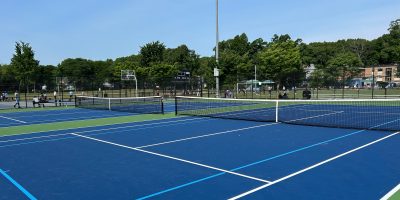
The growth represented 14% of the total growth of the sport for the whole country. Section leadership attributes some of that success to the focus on players on public courts where the study shows 43% of people play tennis in New England.
Last year, the section teamed up with more than 50 town or city park and recreation departments to provide tennis to adults and children of all ages and abilities through the Tennis in the Parks program and the New England Social Tennis League. Together, the programs reached nearly 5,000 adults and children.
Of the 1.1 million total players , 51% consider themselves to be core players, meaning they play more than 10 times a year. USTA New England’s flagship program is USTA League, which is mainly played at tennis clubs and other facilities.
In 2022, nearly 13,000 people played in a league which made up over 30,000 league play occasions. This indicates a player, on average, is on 2.3 teams per year and plays frequently.
In another record-breaking category, New England tennis saw an incredible 7% increase in black players and a 6% increase in Hispanic/Latino players from 2021 to 2022.
According to the study, there are an additional 840,000 people in our region are ‘very interested’ in playing tennis. To learn more about play opportunities, visit www.playtennisnewengland.com.
About the Data
Since 2007, the Tennis Industry Association (TIA) and the United States Tennis Association (USTA) have collaborated to survey tennis participation in the U.S. through the Physical Activity Council (PAC) Study on Sports and Physical Activity, administered by Sports Marketing Surveys USA. In 2022, a total of 18,000 online interviews were conducted among a nationally-representative sample of U.S. individuals ages six and older. Strict quotas associated with gender, age, income, region, and ethnicity were followed to ensure a balanced sample.
Related Articles
-
 Hunt-Almont Courts OpenNovember 02, 2026USTA New England is proud to join USTA National, USTA Eastern Massachusetts and the City of Boston in celebrating the newly renovated Albert “Bootsie” Lewis Courts at Hunt-Almont Park in Boston’s Mattapan neighborhood. The project was supported by a combined $250,000 in USTA funding, including $200,000 from USTA National, $45,000 from USTA New England and $5,000 from USTA Eastern Massachusetts. Read More
-
 Mike Louis FeatureOctober 28, 2026Early in my conversation with Trinity College women’s tennis coach Mike Louis, he said something that could serve as a thesis for his coaching: “Tennis is the easy part.” The difficult work, he said, is everything else: character, relationships, education. It is a perspective that has changed over the years. When Mike was younger, winning occupied a much larger percentage of his attention. But he no longer believes winning is enough. “If you’re not doing it with the right people,” he said, “it doesn’t really mean anything.” Read More
-
 The Power of QuestionsOctober 02, 2026At my first team meeting at the University of Denver, I put the team into groups of three and asked them to list the essential features of a healthy relationship between two players. These nine players came back with fifty-two unique ideas. 52! I was good for 10 or 15, but not 52. What struck me was how much they already knew, the wisdom that the question uncovered. Their collective knowledge had been there all along, in a room full of college students I had assumed I needed to teach. But no one had ever asked them this question. Read More

Sign up for our Newsletter
Download the USTA App

