Tennis Program a Hit for Deaf and Hard of Hearing Students
Paul Mendelson thoroughly enjoyed playing tennis and sharing his love for the sport. Already a board member at St. Louis’s Central Institute for the Deaf (CID), Mendelson decided in 2005 to form an after-school tennis program occurring in CID’s gymnasium to serve the school’s students.
As Mendelson built up the program he encouraged his grandson, Michael Laycob, to attend a session. Laycob visited CID — a nonprofit located near Forest Park whose mission is educating children who are deaf and hard of hearing to listen, talk, read and more — for the first time in 2016.
Laycob loved the work Mendelson was doing and quickly realized his grandfather envisioned turning over leadership to him. When Mendelson passed away in 2018, Laycob kept the after-school program humming and continues running it today with the assistance of CID leadership and volunteers. Like his grandpa, Laycob is also a board member at CID.
“My grandfather was a very important person in my life, and we were incredibly close,” Laycob said. “While we didn’t have any family members who attended CID as a student, I suspect — like me — he was drawn to the school for how remarkable it is and what it does in the St. Louis community.”
Since its founding in 1914, Central Institute for the Deaf has provided newly diagnosed infants, children attending its school and alumni up to age 18 valuable life skills including listening and speaking without sign language. The organization is locally and nationally recognized with 100 percent of CID students with hearing loss receiving full tuition support.
The after-school tennis program is free for CID students to attend. Four pop-up nets get set up in CID’s gymnasium, and participants learn tennis techniques via fun drills and games. Action-packed sessions run an hour and take place either once or twice per week for a two-month season in the fall or spring, depending on CID’s recommendation for a given year.
Laycob said upward of 20 to 25 students have attended the fun-filled sessions. When he began to get more involved in the CID tennis program, Laycob reached out to longtime friend Roger Follmer — Washington University in St. Louis men’s tennis head coach — about chipping in. Follmer jumped at the opportunity, with WashU assistant coaches and men’s tennis players also volunteering. WashU’s women’s tennis team has helped in the past, too.


“We are getting students energized about tennis,” Laycob said. “We’re introducing them to people in the community who have benefited from this incredible sport like myself, like WashU’s players, like their coaches. And letting them see what tennis has to offer regardless of what level of competition you seek. Introducing it as a terrific sport that takes time to learn but can bring so much joy as you learn and develop skills.”
In addition to WashU’s coaches and student-athletes, CID administration, staff and board members — plus members of the community — dedicate their time to the tennis program. USTA Missouri Valley recently awarded CID’s tennis program a grant, and USTA St. Louis Executive Director Megan Kovacs and Tennis Service Representative Alywn Mushonga attended a fall session.
Kovacs and Mushonga visited during “a highlight of the season,” Laycob said, as students walked to the recently refurbished tennis courts in Hudlin Park. The park — which is less than a half-mile from CID — provided the after-school program its first opportunity to play outside on full-sized tennis courts since Laycob began volunteering.
“It takes all of us to come together to make this program possible and teach the next generation of younger players,” Laycob said. “Especially students who haven’t been exposed to the sport — give them a chance to start and learn. None of this likely would be possible without USTA. That’s how I learned. That’s how players at WashU when they were younger learned.
“We all have those skills and character-building that came along with it that we can pass down. You see it in this gymnasium at CID when you see young students trying to learn the sport. You see the WashU players and coaches teaching and feeding balls. You see someone like myself and volunteers who play USTA recreationally. How it all comes together in a way that is doing a lot of good in the community.”
Tennis runs in Laycob’s blood, as both his parents played in addition to his grandpa. Laycob started taking lessons as a 5-year-old at Shaw Park and later Frontenac Racquet Club. He began playing in USTA Missouri Valley tournaments at 12 and traveled to compete in USTA National tourneys until graduating from high school.
Laycob was a standout at John Burroughs School before his four-year tennis career at Cornell University in New York, an Ivy League school. He co-captained Cornell his senior year and called it “phenomenal” and “very challenging” to compete at the NCAA Division-I level.
“It opened my eyes to how many incredible tennis players there are,” Laycob said. “What I also began to learn at that time was tennis was such a terrific way to make friends. Some of my closest friends today were my teammates at Cornell University. Those prior to college tennis I competed against in junior tennis have become friends. We smile and laugh at tight matches we competed against each other in.
“As I get older and reflect on my own tennis career, it was all about making friends, learning a sport, continuing to refine your craft as best you can and enjoying the process that never ends. It’s one that teaches great character-building through the journey.”
Laycob’s children — 12-year-old Ethan and 9-year-old Oliver — are in the early stages of their tennis journey as USTA St. Louis juniors. Ethan has been a regular volunteer at CID’s tennis program, using his skills to help others. He also separately teaches tennis clinics to raise money for a playground being built for St. Louis children with disabilities. Ethan has collected about $2,000 so far for the project.
“Being able to help others through the sport is what’s best about it, all while building character for yourself and others at the same time,” Laycob said. “The way I look at it today is it’s not really about what I have done. It’s about what I have been given — the gifts I have received through the sport of tennis. I had coaches who gave me so much of their time to help me develop my character.
“I so enjoy sharing all that’s been shared with me with others. After you’ve played long enough and become a good tennis player, you now have something to teach others. That’s what it’s all about. You use the sport of tennis to help others learn. In doing so, it does so much for you and everyone around you.”
Related Articles
-
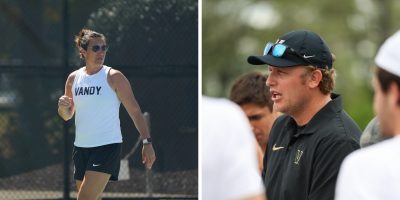
 Vanderbilt's St. Louis DuoOctober 09, 2026Scott Brown and Aleke Tsoubanos grew up playing tennis in St. Louis. Now, the former junior standouts lead the men's and women's tennis teams at Vanderbilt. Read More
 -
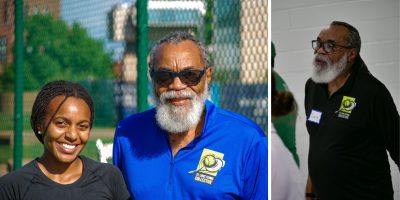
 Coach Gary HickmanOctober 05, 2026Gary Hickman never planned to become a tennis coach. But after answering a call to serve, he's helping youth discover the sport with the St. Louis Tennis Collective. Read More
 -
 Captain Tom RhoadsSeptember 10, 2026For nearly 40 years, Tom Rhoads has been a USTA St. Louis league captain. Today, he leads 16 teams and continues to build the local tennis community. Read More

Sign up for our Newsletter
Download the USTA App

