A focus on growth: An interview with USTA President Brian Vahaly
This piece was originally published in the April 2025 issue of Racquet Sports Industry Magazine.
Brian Vahaly assumed the role of USTA chairman of the board and president in January 2025. Vahaly, who played professionally on the ATP Tour for seven years, was the first current or former ATP player to publicly come out as a member of the LGBTQ+ community. Prior to his professional career, Vahaly attended the University of Virginia, where he was a threetime All-American, reached the NCAA singles final and graduated as an Academic All-American with a double major in finance and business management. He has successfully led and exited multiple private equity-backed health and wellness companies, and currently serves as a senior advisor at the investment firm Brown Advisory. Recently, Vahaly answered RSI’s questions and shared his thoughts and insights on the USTA’s goal of achieving 35 million players by 2035. This conversation has been edited for length and clarity.
Q: The USTA has set a goal of 35 million players by 2035. Can you talk a bit about the aims behind that and the strategies involved in achieving it? will require more courts and improved facilities. What action is the USTA taking to address this need?
Brian Vahaly: This is an ambitious goal, and that’s intentional—we set it to challenge ourselves to think differently about how we grow the game. To achieve it, we’ve identified three strategic areas of focus: player retention, coaching and facilities. Each of these areas requires clear objectives, specific tactics and measurable outcomes that will help drive sustainable participation.
Reaching this goal requires a thoughtful and deliberate approach to how we engage our stakeholders. We operate within a broad ecosystem that includes national and sectional volunteers, staff, CTAs, NJTLs, private sector coaches, high performance athletes and many others. Our role is to support and empower each of these groups in ways that maximize their ability to contribute to our collective success. By doing that effectively, we can create a rising tide that lifts the entire sport.
Q: Any growth in participation will require more courts and improved facilities. What action is the USTA taking to address this need?
Brian Vahaly: Expanding access to courts is a major priority, and we’re putting real resources behind it. We’ve increased our facility grants to $10 million—not just to build new courts, but also to resurface aging ones and ensure existing facilities remain in top condition.
 Brian Vahaly, USTA President and Chairman of the Board.
Additionally, we’re looking for ways to extend playing hours and lengthen the playing season by investing in lights and covered structures where it makes sense.
Bottom line: We’re taking a data-driven approach, analyzing court utilization to make smart, strategic investments with the greatest impact. That means partnering with communities where demand is strong, ensuring courts are well-used and widely accessible. We’re committed to making sure more people have a quality place to play.
Q: Coaching is obviously critical, but why has the USTA identified it as one of the key priorities?
Brian Vahaly: Coaches are the heartbeat of our sport. They’re the ones who bring tennis to life for players of all ages and levels. One of the most fun things about tennis is the challenge of always trying to get better, and a great coach makes that journey exciting. I know firsthand how much a coach can shape a player’s love for the game—when you have a coach who makes tennis fun, who inspires you, it changes everything. And that experience is the key to keeping people in the sport.
 Coaches help bring tennis to life for players of all ages and levels.
That’s why the USTA believes we must do more to support coaching—not just by improving the quality and expertise of coaches, but by increasing the number of them. We want more high school and college players to see coaching as a path to a successful career doing something they love.
If we can inspire more young players to step into coaching, we’re not just helping them build a rewarding future—we’re ensuring the next generation has great coaches to keep them in the game and help our sport grow.
Another key focus is expanding the idea of what it means to be a tennis coach, because coaching shouldn’t be limited to professionals. In so many other sports—soccer, lacrosse, football—parents are often their kids’ first coaches. Tennis should be no different.
Parents can introduce their kids to the game, and they should. Our role is to give them the right tools to make it easy, fun and accessible. By empowering parents alongside full-time and part-time coaches, we can expose more kids to tennis early on and create a stronger foundation for lifelong participation.
Q: The USTA is embracing Red Ball as a way to create an easier and more enjoyable entry into the sport. Why is this important?
Brian Vahaly: We made a mistake in how we originally positioned Red Ball, presenting it solely as a tool for kids learning the game. In reality, Red Ball Tennis is the perfect entry point for any new player, regardless of age.
We’ve seen firsthand what has fueled pickleball’s rapid growth—its first-time player experience is fun, social and immediately playable. That ability to retain brand-new players, many of whom had never played before, has been the driving force behind its growth, and we should take that lesson to heart.
That’s exactly why we started testing Red Ball Tennis with adult beginners in 2024, and the results were immediate. Players were more engaged, spent less time chasing balls and had longer rallies—creating a more enjoyable experience right from the start. Most importantly, 75% of them wanted to keep playing. That kind of retention rate is hard to ignore.
We’re fortunate that the US Open and American tennis success continue to inspire millions of new players to pick up a racquet each year. But inspiration alone isn’t enough—we need to make sure their first experience keeps them coming back. That’s why encouraging these players to start with a Red Ball is so important. It makes the game instantly more fun and gives new players the confidence to stay in the sport. If we get this right, we’re not just improving their first-time experience—we’re setting tennis up for long-term growth.
 Red Ball Tennis has proved a perfect entry point into the sport for players of all ages.
Q: How is the USTA ensuring that tennis is accessible to all, regardless of background or income level?
Brian Vahaly: Making tennis truly accessible starts with a few key things. First, people need public, playable courts nearby—because if there’s no place to play, everything else becomes a challenge. Second, we need great, affordable coaches and programming so that learning the game is not only possible, but welcoming and enjoyable. Third, finding a court and someone to hit with should be easy—if it’s complicated, people will choose another activity.
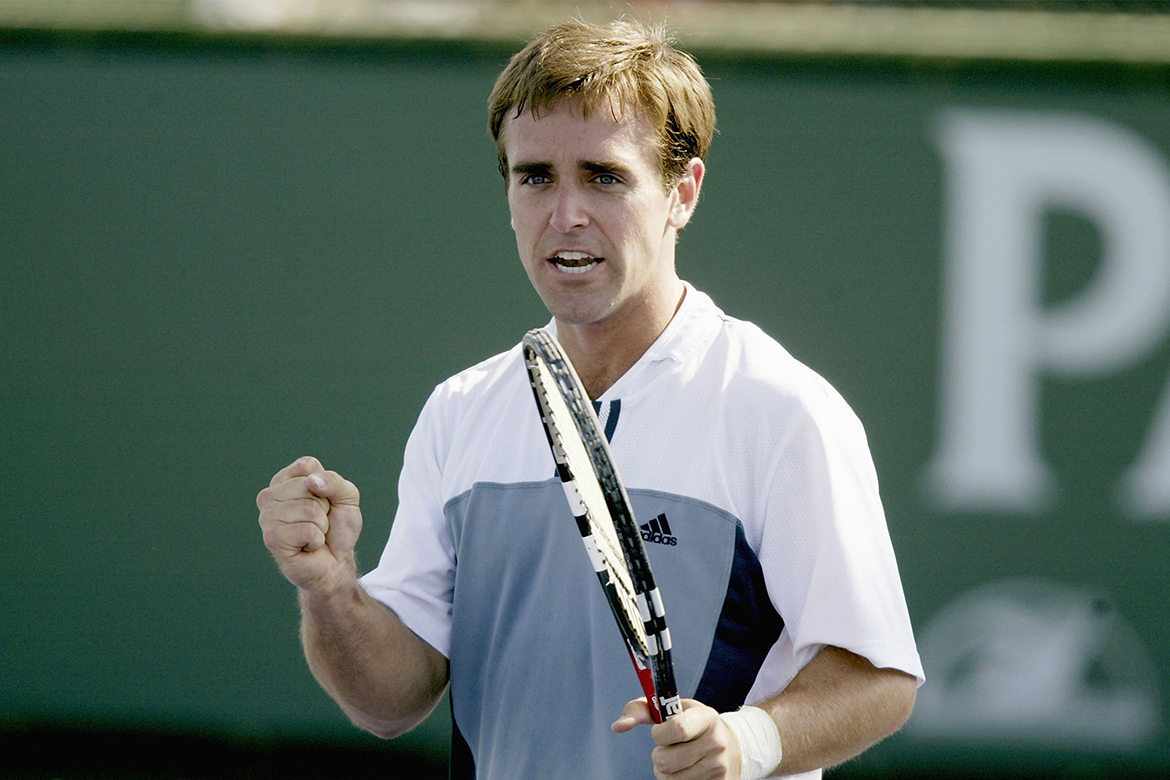 Brian Vahaly played on the ATP Tour for seven years.
But accessibility isn’t just about facilities—it’s also about breaking down barriers to entry. Tennis shouldn’t feel exclusive or expensive. Sports like basketball and soccer thrive because they’re easy to pick up and play, and we need to make sure tennis offers that same opportunity.
That starts with rethinking what a “tennis court” means. You don’t always need a perfect court—just grab a racquet, draw lines in the driveway, put up a portable net and start rallying with friends. The more we encourage creativity and fun, the more we’ll grow the sport.
The USTA has a responsibility to ensure that cost and access are never reasons someone can’t play. Whether it’s expanding community programs, increasing play opportunities in underserved areas, or simply making the game easier to start, we are committed to making sure tennis is a sport for everyone.
Q: What role do the USTA’s industry partners play in growing the sport?
Brian Vahaly: Reaching 35 million players by 2035 isn’t something the USTA can do alone—it requires collaboration with manufacturers, retailers, teaching pros and entrepreneurs to ensure the entire tennis ecosystem grows together.
For example, as we roll out Red Ball to everyone, we need to partner with manufacturers to ensure equipment is widely available and that we collectively market this shift in positioning. At the same time, we need to work closely with our industry partners, sharing data and insights to understand what’s working, identify opportunities, and finding ways to keep more players engaged.
Growth doesn’t happen in isolation, and by aligning our efforts, we can continue learning, adapting and building a stronger future for the sport.
Q: The US Open is one of the most powerful platforms in sports. How does it contribute to growing the game?
Brian Vahaly: We all remember what it’s like to pretend we’re hitting the ball like our favorite players or even throwing in a well-timed grunt for effect. The US Open is where those moments begin—it’s the stage that showcases our sport at its highest, most electrifying level. Watching the best in the world battle it out inspires so many of us to pick up a racquet and dream about what it’s like to play on Arthur Ashe Stadium under the lights. The US Open is the jet fuel that propels our sport forward.
That’s why the USTA is investing over $700 million to upgrade the USTA Billie Jean King National Tennis Center, including renovations to Arthur Ashe Stadium. We see massive opportunities to elevate the US Open as both a sporting and entertainment property, ensuring it continues to be a world-class event for decades to come.
 The US Open showcases tennis at its highest, most electrifying level.
Q: What is the USTA doing to improve its digital and data strategy?
Brian Vahaly: This will be a key focus for us over the next several years. Without great data, it’s difficult to measure the effectiveness of our initiatives and spending. The USTA is committed to improving how we collect, analyze and apply data to drive smarter business decisions with better outcomes.
As it relates to our data strategy, we know there’s a lot of work to do in creating a stronger digital experience for players, coaches and fans. But we don’t need to do this alone—there are incredible entrepreneurs both in tennis and across sports who are developing innovative technologies that we can leverage.
That’s why I’m incredibly excited about USTA Ventures and our commitment to investing in entrepreneurs who can help us move faster. We are currently focusing on finding opportunities that enhance player participation and retention, as well as innovations that elevate the fan experience at the US Open to drive additional revenue.
Q: If you could wave a magic wand and get one additional asset in the pursuit of 35x35, what would it be?
Brian Vahaly: I would love it if we get our culture right. We need to ensure we have a positive, welcoming and inclusive culture—one where the best idea always wins, no matter where it comes from. We can’t be afraid of accountability or failure. Tennis has already taught us that failure is part of growth. And we need to shift the culture around data so that every strategic decision we make is measured, thoughtful and based on real insights.
I truly believe tennis has the potential to be massive in America—globally, we have the fourth-largest fan base of any sport. We know firsthand the physical, emotional and social benefi ts tennis provides. And I personally believe the world is simply a better, healthier place with more tennis players in it. So let’s go compete and make it happen!
Related Articles
-
 2026 Champs of EqualityOctober 20, 2026Kaitlin Roselius, Marcy Hirshberg and Kathy Connelly were recognized at the 2026 US Open during the fourth annual Champions of Equality event. Read More
 -
 FSNM Gala nets $1.5mOctober 19, 2026Andre Agassi, Steffi Graf, Martina Navratilova and other tennis legends helped raise $1.5 million for the First Serve New Mexico Foundation, a USTA NJTL chapter. Read More
 -
 HHM: ALPFA scholarshipSeptember 29, 2026In celebration of Hispanic Heritage Month, the USTA spoke with recipients of the USTA × ALPFA Scholarship Program to hear how the scholarship helps shape their futures. Read More



Sign up for our Newsletter
Download the USTA App

